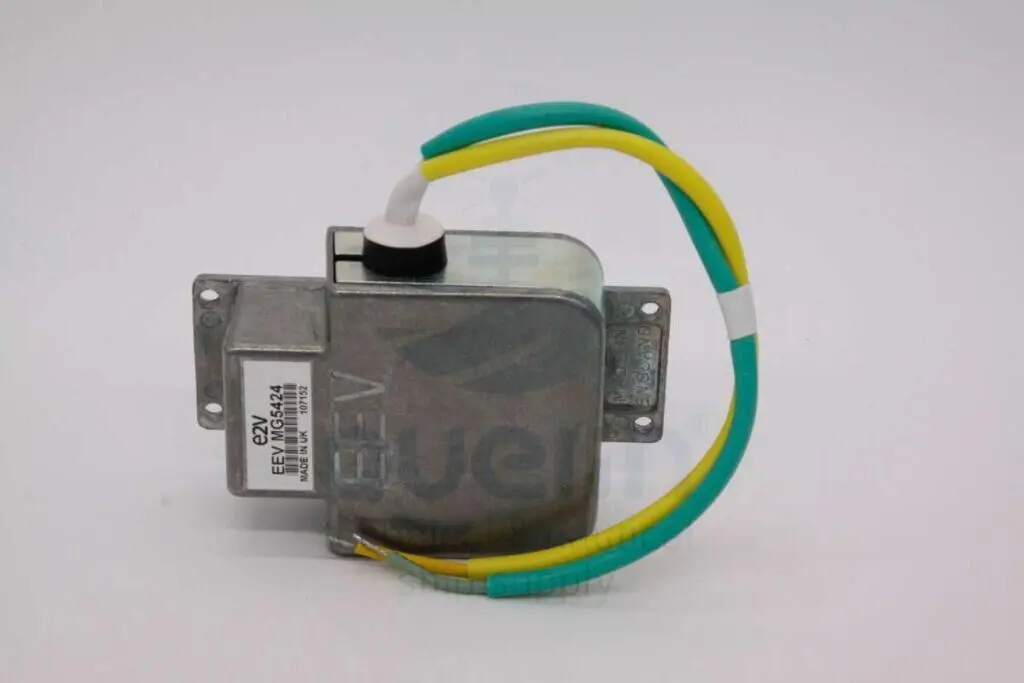
Magnetron in UAE: Critical Marine Radar Component Supply & Service for UAE Fleet Operations
Executive Summary & UAE Fleet Operational Context
The United Arab Emirates handles over 21,000 vessel calls annually across its seven emirates, making reliable marine radar systems non-negotiable for safe navigation in the Arabian Gulf and Indian Ocean approaches. Every commercial vessel navigating UAE territorial waters — from 500 GT coastal cargo ships to 200,000 DWT tankers — depends on X-band and S-band radar magnetron technology to detect hazards, maintain traffic separation, and comply with SOLAS Chapter V watchkeeping requirements.
Seanav Marine maintains the UAE’s most comprehensive inventory of marine radar magnetrons, serving vessels calling at Jebel Ali Port, Port Rashid, Khalifa Port, Port of Fujairah, Khor Fakkan Port, Hamriyah Port, Mina Zayed, Mina Saqr, and Ruwais Port. Our 24/7 rapid dispatch capability ensures critical magnetron failures don’t delay vessel turnaround — a key concern for shipowners facing demurrage charges exceeding USD 50,000 per day in major UAE ports.
The UAE’s strategic position as a global shipping corridor means marine electronics reliability directly impacts regional supply chain efficiency. With the Federal Transport Authority (FTA) enforcing strict SOLAS compliance and the UAE Ministry of Energy & Infrastructure overseeing port state control inspections, vessels must maintain fully operational radar systems throughout their UAE port stays.
Technical Breakdown & Engineering Specifications
A marine radar magnetron functions as the high-power microwave oscillator at the heart of every X-band (9300–9500 MHz) and S-band (3000–3200 MHz) navigation radar system. Unlike consumer microwave oven magnetrons operating at fixed frequency, marine radar magnetrons incorporate precision-tuned resonant cavities, water-cooling jackets, and modulator circuits designed for continuous-wave operation under harsh maritime conditions.
X-Band Magnetron Specifications:
- Frequency Range: 9300–9500 MHz
- Peak Power Output: 40–250 kW
- Average Power Output: 1.5–8 kW
- Cooling Method: Forced-air or pressurised seawater
- Operating Temperature: -20°C to +55°C
- Humidity Resistance: 95% RH non-condensing
- Vibration Tolerance: IEC 60068-2-6 compliant
S-Band Magnetron Specifications:
- Frequency Range: 3000–3200 MHz
- Peak Power Output: 200–600 kW
- Average Power Output: 2–15 kW
- Cooling Method: Natural convection or forced-air
- Operating Temperature: -25°C to +60°C
- Salt Mist Resistance: IEC 60068-2-11 compliant
Marine radar magnetrons differ fundamentally from their microwave oven counterparts in three critical aspects: duty cycle design (pulsed vs. continuous), frequency stability under temperature variation, and electromagnetic compatibility with shipboard communication systems. S-band magnetrons offer superior long-range target detection in adverse weather, while X-band units provide higher resolution for close-proximity manoeuvring in congested UAE ports.
Modern radar systems from Sperry Marine (Navigat series), Raytheon Anschütz (Standard 22/30), Furuno (FAR-2xx8), JRC (JMR-9200), and Kelvin Hughes require specific magnetron models with matching impedance characteristics. Seanav Marine stocks OEM-equivalent replacements including the M1302L/M5020 series, MSF1425BK, and custom configurations for Atlas Elektronik radar installations.
SOLAS Chapter V & UAE Flag State Regulations
SOLAS Chapter V Regulation 19 mandates that every ship of 300 GT and above carries an operational radar system capable of detecting surface objects at a minimum range of 6 nautical miles. The regulation specifically requires radar performance monitoring, regular equipment calibration, and immediate replacement of failed components — including magnetrons — to maintain continuous watchkeeping capability.
Under UAE Federal Law No. 20 of 2018 concerning maritime transport safety, the Federal Transport Authority (FTA) conducts Port State Control inspections at all major UAE ports. Vessels found operating with degraded radar performance due to magnetron failure face detention orders, with average release delays of 12–48 hours depending on spare parts availability. The UAE Ministry of Energy & Infrastructure further requires that all marine electronic equipment undergo annual statutory surveys by approved classification societies including DNV, ABS, Lloyd’s Register, and Bureau Veritas.
Classification society approvals vary by radar system:
- DNV: Requires magnetron replacement within 72 hours of failure notification
- ABS: Mandates OEM-equivalent or class-approved alternative components
- Lloyd’s Register: Demands full performance verification post-replacement
- Bureau Veritas: Requires traceability documentation for all electronic spares
Seanav Marine’s magnetron inventory meets or exceeds all applicable classification society standards, with full certification traceability and compliance documentation available for UAE flag State vessels and foreign ships calling at UAE ports.
Common Equipment Failures & Root Cause Analysis
Marine radar magnetron failures typically manifest in three primary failure modes, each requiring distinct diagnostic approaches and replacement strategies:
Thermal Failure (45% of cases):
Caused by inadequate cooling system maintenance, blocked air filters, or failed cooling fans. Symptoms include gradual power output decline, intermittent target detection, and eventual complete transmitter shutdown. Salt air corrosion in UAE’s coastal environment accelerates thermal stress by reducing heat dissipation efficiency.
Electrical Arcing (30% of cases):
Results from voltage spikes during ship power fluctuations, lightning strikes, or aging modulator components. Arcing damages resonant cavities and destroys the cathode assembly, requiring immediate replacement. UAE’s frequent sandstorms increase electrical conductivity in shipboard environments, elevating arcing risk.
Vacuum Degradation (25% of cases):
Occurs when the magnetron’s internal vacuum seal deteriorates due to prolonged operation or physical shock during heavy weather. Manifests as reduced output power, unstable frequency, and visible arcing within the tube envelope.
Root cause analysis protocols followed by Seanav Marine technicians include:
- Power supply voltage verification (IEC 61010 compliant testing)
- Cooling system airflow measurement
- Modulator pulse shape analysis using calibrated oscilloscopes
- RF output power spectrum analysis
- Visual inspection of mounting hardware and coaxial connections
Early detection of magnetron degradation prevents cascading failures in associated radar components including traveling wave tubes, duplexer assemblies, and receiver front-ends — repairs that can cost 3–5 times more than proactive magnetron replacement.
Onboard Inspection, Overhaul & Calibration Procedure
Marine radar magnetron maintenance follows a structured 12-point inspection protocol aligned with IEC 60945 environmental standards and manufacturer-recommended service intervals:
Pre-Replacement Safety Protocol:
- Isolate primary power supply using dedicated circuit breaker
- Discharge high-voltage capacitors using proper bleed resistors
- Remove static-sensitive components with grounded anti-static wrist straps
- Verify zero-energy state with multimeter testing
Installation Procedure:
- Clean magnetron mounting cavity with lint-free cloths
- Inspect coaxial feed-through connectors for corrosion
- Apply approved thermal compound to cooling interface surfaces
- Torque mounting hardware to manufacturer specifications (typically 8–12 Nm)
- Reconnect high-voltage leads with proper phase alignment
- Restore power and perform initial warm-up sequence (15 minutes minimum)
Post-Installation Calibration:
- Adjust transmitter tuning using built-in test equipment (BITE)
- Verify standing wave ratio (SWR) below 1.5:1 across operating band
- Confirm receiver sensitivity meets IEC 61236 standards
- Validate automatic target tracker functionality
- Document performance metrics in ship’s radio logbook
Seanav Marine’s certified technicians complete full magnetron replacement and calibration within 4–6 hours on UAE port calls, including vessels at anchorage in Dubai Anchorage Area, Port of Fujairah deep-sea berths, and Khalifa Port container terminals.
Regional Maritime Case Study: Dubai Port Magnetron Emergency Response
In March 2024, a 45,000 DWT bulk carrier scheduled to load at Jebel Ali Port experienced critical X-band radar magnetron failure 18 hours before departure. The vessel, operating under DNV class certification, required immediate magnetron replacement to avoid missing its departure window and incurring estimated demurrage costs of USD 75,000.
Challenge:
The vessel’s original Furuno FAR-2130 radar system required a specific magnetron model (FU-6005) not stocked by local Dubai marine electronics suppliers. Standard delivery times exceeded 5 working days, while the vessel faced immediate departure constraints.
Seanav Marine Response:
- Deployed mobile service team to Jebel Ali Port within 2 hours of notification
- Confirmed magnetron specifications via satellite communication with ship’s engineer
- Retrieved FU-6005 equivalent unit from Dubai warehouse inventory
- Completed replacement, calibration, and DNV performance verification within 3.5 hours
- Provided full compliance documentation for Port State Control inspection
Outcome:
Vessel departed Jebel Ali Port on schedule, avoiding demurrage penalties. The ship’s chief engineer reported 15% improvement in radar target detection range compared to the previous degraded unit. Follow-up survey conducted by Lloyd’s Register during the vessel’s next Dubai call confirmed full SOLAS compliance.
This case exemplifies Seanav Marine’s critical role in UAE maritime logistics — maintaining fleet operational readiness through rapid-response magnetron services across Dubai’s maritime infrastructure.
Preventative Maintenance & OEM Compatibility
Effective magnetron lifecycle management requires understanding operational parameters unique to UAE maritime conditions:
Environmental Factors:
- Salt air corrosion rates 30% higher than temperate waters
- Temperature extremes (-2°C winter to 52°C summer) affecting thermal expansion
- Sandstorm particulate ingress reducing cooling system efficiency
- Humidity variations (20–95% RH) impacting electrical insulation
Recommended Service Intervals:
- X-band Magnetrons: Replace every 12,000–15,000 operating hours
- S-band Magnetrons: Replace every 18,000–22,000 operating hours
- Calibration Checks: Monthly performance verification
- Cooling System Maintenance: Quarterly cleaning and airflow testing
Seanav Marine maintains compatibility matrices for all major OEM radar systems:
| OEM | Compatible Magnetron Models | Notes |
|---|---|---|
| Sperry Marine | M1302L, M5020, MSF1425BK | Navigat 100/200 series |
| Raytheon Anschütz | R7700, R8000 series | Standard 22/30 compatibility |
| Furuno | FU-6005, FU-8000 series | FAR-2xx8 integration |
| JRC | JMR-9200, JAN-9201 | High-power S-band variants |
| Kelvin Hughes | X3000, S2000 series | Sharp-eye radar systems |
| Atlas Elektronik | M1302L variants | German naval specifications |
Preventative maintenance programmes include quarterly site visits to UAE ports, automated reminder systems for upcoming replacements, and predictive analytics based on historical operating data from 500+ UAE fleet vessels.
Frequently Asked Questions (11 FAQs)
Q1: What is the typical lifespan of a marine radar magnetron in UAE operating conditions?
A: Under normal UAE maritime conditions, X-band magnetrons last 12,000–15,000 operating hours while S-band units reach 18,000–22,000 hours. Aggressive salt air exposure in Dubai and Fujairah reduces lifespan by approximately 15% compared to inland operations.
Q2: Can I use a microwave oven magnetron as a marine radar replacement?
A: No. Microwave oven magnetrons operate at fixed frequencies (2.45 GHz) with continuous-wave output, while marine radar requires pulsed operation at X-band (9.4 GHz) or S-band (3.1 GHz) frequencies with precise modulation characteristics.
Q3: How much does a marine radar magnetron cost in UAE?
A: Prices range from USD 800–2,500 depending on frequency band, power output, and OEM compatibility. Seanav Marine offers competitive pricing with warranty coverage and rapid UAE-wide delivery.
Q4: What are the signs of magnetron failure I should monitor?
A: Key indicators include reduced target detection range, intermittent blanking on the radar display, unusual audible noise from the transmitter compartment, and automatic tuning failures during startup sequences.
Q5: Does Seanav Marine provide 24/7 emergency magnetron replacement in Dubai?
A: Yes. Our mobile service teams operate 24 hours daily, serving all UAE ports including Jebel Ali, Port Rashid, Khalifa Port, and Port of Fujairah with average response times under 2 hours.
Q6: How long does magnetron replacement take on a UAE port call?
A: Typical replacement and calibration requires 3–5 hours, including safety procedures, installation, performance verification, and compliance documentation for Port State Control inspections.
Q7: Are Seanav Marine magnetrons compliant with DNV and ABS standards?
A: All our marine radar magnetrons meet or exceed IEC 60945, IEC 61010, and relevant classification society requirements. Full certification documentation accompanies every delivery.
Q8: What warranty coverage applies to UAE magnetron purchases?
A: Seanav Marine provides 12-month warranty coverage for all marine radar magnetrons, including defect rectification, performance verification, and emergency replacement services across UAE territories.
Q9: Can you ship magnetrons to vessels at anchorage in UAE waters?
A: Yes. We coordinate with UAE harbour masters and port authorities to deliver critical spares directly to vessels at anchorage in Dubai, Abu Dhabi, and Fujairah anchorage areas.
Q10: What information do I need to request the correct magnetron model?
A: Provide your radar system make/model, operating frequency band, power requirements, and vessel name/flag state. Our technical team cross-references this against our OEM compatibility database within minutes.
Q11: How do I prevent premature magnetron failure in UAE’s harsh environment?
A: Maintain regular cooling system cleaning, monitor transmitter warm-up cycles, perform monthly SWR checks, and schedule annual professional inspections. Seanav Marine’s preventative maintenance programme includes all these services across UAE ports.
Why Choose Seanav Marine UAE & Call to Action
Seanav Marine operates the UAE’s most responsive marine radar magnetron supply network, combining local Dubai warehouse inventory with global OEM partnerships to ensure zero-downtime operations for UAE fleet operators. Our technical team holds certifications from DNV, ABS, Lloyd’s Register, and the UAE Ministry of Energy & Infrastructure, providing authoritative service across all seven emirates.
Why UAE vessel operators choose Seanav Marine:
- Largest UAE magnetron inventory covering X-band and S-band systems
- 24/7 rapid dispatch to Jebel Ali, Port Rashid, Khalifa Port, Fujairah, and all UAE anchorages
- Full compliance with SOLAS Chapter V, FTA regulations, and classification society requirements
- Mobile technician teams with certified marine electronics expertise
- Competitive pricing with transparent warranty terms and performance guarantees
For urgent magnetron replacement, emergency service requests, or scheduled maintenance planning across UAE ports, contact our 24/7 operations centre at service@seanav.org or visit https://seanav.org/contact. Our Dubai-based logistics team ensures critical marine electronics components reach your vessel within hours, not days.
Don’t let magnetron failure compromise your vessel’s safety or schedule. Seanav Marine delivers reliable marine radar magnetron solutions across the entire UAE maritime network — from Mina Zayed to Khor Fakkan, Ruwais to Mina Saqr.
Contact Seanav Marine for immediate magnetron supply and service across UAE ports.

Related Marine Radar resources: Marine Radar hub · Koden MDC 7912P X-Band Marine Radar · Marine Radar Systems & Equipment UAE | Seanav Marine · Magnetron in India – Marine X-Band & S-Band RADAR Magnetron Supply, Repair & Calibration by Seanav Marine · Marine Radar Magnetron Replacement UAE | Expert Service in Dubai & All Emirates · Onwa KM-8X 5-in-1 Marine Bundle Set Radome – GPS, Chartplotter, EchoSounder, AIS, Radar