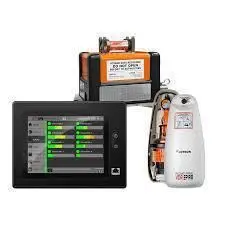
Is Your VDR Strategy Ready for the Next Decade?
Executive Summary & UAE Fleet Operational Context
Across the United Arab Emirates, commercial shipping activity continues to expand at Jebel Ali Port, Khalifa Port, and the Port of Fujairah. With over 20,000 vessels calling annually, the operational tempo demands unwavering compliance with international safety standards. Among these, the Voyage Data Recorder (VDR) stands as a cornerstone of maritime incident investigation and regulatory adherence.
The UAE Ministry of Energy & Infrastructure, in collaboration with the Federal Transport Authority (FTA), enforces strict IMO-aligned mandates for all commercial vessels navigating Emirati waters. SOLAS Chapter V, Regulation 333(90), requires approved VDR or Simplified VDR (S-VDR) systems to be operational at all times. However, compliance today does not guarantee readiness for tomorrow.
Ageing VDR installations present escalating risks: obsolete firmware, degraded protective capsules, and outdated data retrieval protocols. These vulnerabilities compromise not only investigative capabilities but also expose operators to detention, penalties, and reputational damage during Port State Control inspections.
Seanav Marine delivers end-to-end VDR lifecycle support—from annual performance testing to full-system retrofits—ensuring every vessel under the UAE flag or calling at UAE ports meets current and future regulatory expectations. Our certified engineers operate across Dubai, Abu Dhabi, Sharjah, and Fujairah, providing rapid response and proactive maintenance solutions tailored to regional maritime conditions.
Technical Breakdown & Engineering Specifications
Modern VDR systems integrate advanced embedded computing platforms with robust data storage architectures. At the core lies the Main Cabinet Unit, typically powered by a Linux-based real-time operating system. This configuration ensures reliability, minimal heat generation, and resistance to electromagnetic interference—all critical for continuous operation in harsh marine environments.
Key components include:
| Component | Function |
|---|---|
| Main Cabinet Unit | Central processing and data aggregation hub |
| Protective Data Capsule | Survivable memory module resistant to fire, impact, and pressure |
| Float-Free Capsule | Automatically deploys and transmits location via satellite beacon |
| Remote Alarm Unit | Continuous monitoring with audible/visual fault indicators |
| Microphone Unit | Captures bridge audio communications with amplification |
The Protective Data Capsule must comply with IEC 61996 standards, surviving extreme conditions:
- Penetration resistance: 100mm steel rod dropped from 3 meters
- Impact tolerance: 50g acceleration for 11 milliseconds
- Thermal endurance: 260°C for 10 hours, then 1100°C for 1 hour
- Deep-sea pressure: 60 MPa for 30 days at 6,000-meter depth
Float-Free Units incorporate GPS positioning beacons operating at 406 MHz and 121.5 MHz frequencies, ensuring rapid recovery post-incident. Battery systems sustain operation for minimum seven days, supporting automatic release mechanisms triggered by hydrostatic pressure sensors.
Data capacity ranges from 32GB solid-state storage to cloud-integrated telemetry modules. Ethernet connectivity enables seamless integration with navigation sensors, radar systems, and gyrocompass outputs. Replay software facilitates forensic analysis, crew training, and real-time bridge monitoring.
Seanav Marine supports leading VDR manufacturers including Headway SVDR HMT-100A and Totem Plus VDR/SVDR, offering comprehensive Annual Performance Testing (APT) aligned with IMO MSC.333(90) and IEC 62949 standards.
SOLAS Chapter V & UAE Flag State Regulations
SOLAS Chapter V mandates that all passenger ships and cargo vessels exceeding 300 GT carry an approved VDR system. Two pathways exist:
- VDR: Full-scope recording covering 120 parameters over 24-hour periods
- S-VDR: Simplified recording focusing on essential navigation and communication data
In the UAE, enforcement falls under the Federal Transport Authority (FTA), which adopts IMO resolutions verbatim. Vessels must undergo annual APT conducted by accredited service providers. Non-compliance results in detention during Port State Control audits at Jebel Ali, Port Rashid, and other regional hubs.
Additionally, the UAE Ministry of Energy & Infrastructure requires documentation proving:
- System approval certificates matching IMO MSC.333(90)
- Valid APT logs signed by authorized technicians
- Functional testing records for protective capsules
- Audio recording integrity verification
Class society approvals—including DNV, ABS, and Lloyd’s Register—are accepted conditionally. However, local authorities prioritize FTA-certified service providers for onboard inspections.
Seanav Marine maintains direct partnerships with classification societies and holds recognized inspector credentials for UAE waters. Our team performs APTs in accordance with VDR and SVDR guidelines, ensuring zero-deficiency outcomes during PSC reviews. We serve vessel operators throughout Dubai, Abu Dhabi, Sharjah, Ajman, Umm Al Quwain, Ras Al Khaimah, and Fujairah.
Common Equipment Failures & Root Cause Analysis
Despite rigorous design standards, VDR systems experience predictable failure modes. Understanding these patterns enables targeted interventions that prevent costly downtime.
1. Protective Capsule Degradation
Saltwater ingress through compromised O-rings or aged seals leads to internal corrosion. Repeated thermal cycling weakens solder joints, causing intermittent data loss. Regular seal replacement and pressure testing mitigate this risk.
2. Firmware Obsolescence
Legacy systems running outdated Linux kernels lack patch support for emerging cyber threats. Unpatched vulnerabilities expose vessels to unauthorized access attempts targeting recorded navigation data.
3. Sensor Communication Errors
Ethernet switches failing due to power surges disrupt data flow between sensors and the main unit. Poor grounding practices exacerbate electromagnetic interference, corrupting recorded signals.
4. Audio Capture Malfunctions
Microphone units suffer from amplifier drift and connector oxidation. Distorted or missing bridge audio undermines investigative value, particularly during collision or grounding scenarios.
5. Battery Backup Failures
Insufficient UPS runtime during power transitions risks partial data loss. Temperature fluctuations inside engine room installations accelerate battery degradation beyond manufacturer specifications.
Seanav Marine employs predictive diagnostics tools to identify early-stage anomalies before they escalate into reportable faults. Our engineers conduct root cause analysis using trend data from thousands of serviced units, enabling proactive component replacements aligned with manufacturer-recommended intervals.
Onboard Inspection, Overhaul & Calibration Procedure
Effective VDR management requires structured inspection routines executed by qualified personnel. Seanav Marine follows standardized procedures compliant with IMO MSC.1/Circ.1432 and IEC 62949 frameworks.
Pre-Inspection Preparation
- Verify availability of latest system firmware and configuration backups
- Confirm presence of valid APT certificate and previous service reports
- Schedule inspection during dry-dock or alongside periods to minimize disruption
Physical Inspection Protocol
- Examine protective capsule mounting brackets for stress fractures
- Test float-free mechanism activation under simulated deployment conditions
- Inspect cable routing for chafing, UV exposure, or mechanical damage
- Validate grounding continuity between all interconnected subsystems
Software Verification Steps
- Execute self-test routines embedded within the replay application
- Cross-reference timestamp synchronization accuracy against GPS pulse-per-second signals
- Simulate sensor input failures to confirm alarm functionality
- Perform checksum validation on stored data blocks within solid-state drives
Calibration Requirements
- Adjust microphone sensitivity settings based on ambient noise measurements
- Recalibrate underwater acoustic beacon activation thresholds
- Update encryption keys for secure data transmission protocols
- Re-certify protective capsule integrity through hydrostatic pressure simulation
Post-service documentation includes detailed fault logs, corrected action items, and updated maintenance schedules. All work adheres to manufacturer warranties and class society approval requirements.
Regional Maritime Case Study (Dubai / Fujairah Port)
A Panamanian-flagged bulk carrier operating between Jebel Ali and the Port of Fujairah experienced recurring VDR shutdown alarms during transits. Initial troubleshooting revealed inconsistent power delivery affecting the main cabinet unit.
Upon inspection, Seanav Marine engineers identified three contributing factors:
- Voltage fluctuations originating from aging generator regulators
- Corroded Ethernet switch ports causing intermittent sensor connectivity
- Outdated firmware lacking automatic reboot recovery features
Corrective actions included:
- Installing voltage stabilizers upstream of the VDR power supply
- Replacing legacy switches with industrial-grade managed PoE+ alternatives
- Upgrading system firmware to latest vendor-supported version
Following remediation, the vessel completed six consecutive voyages without incident, achieving clean PSC clearance at both Dubai and Fujairah anchorages. The owner reported reduced insurance premiums attributed to improved safety audit scores.
This case underscores the importance of holistic system evaluation rather than isolated component repair. Proactive upgrades deliver measurable returns through minimized delays, avoided detentions, and enhanced operational predictability.
Preventative Maintenance & OEM Compatibility
Long-term VDR performance hinges on disciplined preventative maintenance programs. Seanav Marine develops customized maintenance plans incorporating:
- Quarterly visual inspections and connector reseating
- Semi-annual firmware updates and security patches
- Annual APT scheduling synchronized with class surveys
- Biennial protective capsule seal replacements
- Five-year lifecycle assessments for full-system replacement planning
OEM compatibility considerations vary significantly across platforms:
- Headway HMT-100A: Supports modular expansion cards compatible with older Rutter systems
- Totem Plus VDR/SVDR: Offers scalable I/O configurations suitable for mixed-fleet deployments
- Netwave NW6000 Series: Integrates seamlessly with existing cabling infrastructures during retrofit projects
Seanav Marine maintains inventory stocks of critical spares including protective capsules, microphone assemblies, and interface cables. Our logistics network ensures same-day dispatch to Dubai, Abu Dhabi, and Fujairah facilities.
We recommend transitioning legacy systems toward next-generation architectures featuring:
- Encrypted data transmission protocols
- Cloud-based backup integration
- Real-time health monitoring dashboards
- Automated compliance reporting tools
These enhancements align with evolving IMO cybersecurity guidelines while preparing fleets for future digitalization mandates.
Frequently Asked Questions (10-15 FAQs)
Q1: How often should a VDR undergo Annual Performance Testing?
A: Every 12 months, preferably coordinated with class surveys. Testing must be performed by qualified technicians holding valid approvals from recognized societies such as DNV or ABS.
Q2: Can an S-VDR replace a full VDR on existing vessels?
A: Only if the vessel falls below 3,000 GT or operates exclusively on short international voyages. Larger vessels require full VDR installations per SOLAS Chapter V requirements.
Q3: What happens if a VDR fails during a Port State Control inspection?
A: Immediate detention risk applies. Operators may request temporary exemption pending rectification, subject to PSC discretion and local authority approval.
Q4: Are there cybersecurity implications associated with VDR systems?
A: Yes. Legacy systems lacking encrypted communications are vulnerable to unauthorized access. Modern VDRs implement TLS protocols and role-based access controls to safeguard recorded data.
Q5: Do protective capsules require periodic replacement?
A: While designed for 10-year service life, environmental exposure necessitates biennial seal inspections. Replacement intervals depend on operating conditions and manufacturer recommendations.
Q6: How does Seanav Marine handle urgent VDR repairs in UAE ports?
A: Our field service teams maintain 24/7 availability across Dubai, Abu Dhabi, and Fujairah. Emergency callouts prioritize vessels preparing for departure or those detained pending resolution.
Q7: Is it possible to upgrade older VDR systems without replacing entire installations?
A: Many vendors offer retrofit kits enabling hardware refreshes while retaining existing cabling. These solutions reduce labor costs and minimize vessel downtime.
Q8: What data retention periods apply to VDR recordings?
A: Minimum 30 days for continuous loop storage. Some systems support extended retention up to 12 months when configured appropriately.
Q9: Does audio recording quality affect APT outcomes?
A: Absolutely. Clear voice reproduction is mandatory. Distorted or silent recordings result in failed APT certification requiring immediate correction.
Q10: How frequently should protective capsule batteries be tested?
A: Monthly voltage checks plus annual load testing ensure reliable operation. Replacement cycles typically occur every three to five years depending on usage frequency.
Q11: Can Seanav Marine provide remote diagnostics support?
A: Yes, through encrypted telemetry connections allowing real-time system status monitoring and parameter adjustments without physical presence.
Q12: Are there special considerations for VDR installations in UAE’s hot climate?
A: Elevated ambient temperatures demand additional cooling measures. Seanav Marine specifies thermally hardened enclosures rated for 60°C continuous operation.
Q13: What training do seafarers receive regarding VDR operation?
A: Basic familiarization covers alarm acknowledgment, manual override procedures, and emergency shutdown sequences. Advanced courses include replay analysis and data export techniques.
Q14: How do insurance companies view proactive VDR maintenance?
A: Insurers reward documented preventative care with premium discounts and expedited claims processing following incidents involving well-maintained systems.
Q15: What distinguishes Seanav Marine’s VDR services from generic providers?
A: Local expertise, direct OEM relationships, and FTA-recognized certification set us apart. Our engineers combine technical proficiency with deep understanding of UAE maritime regulations.
Why Choose Seanav Marine UAE & Call to Action
Selecting the right VDR partner determines whether your fleet remains operationally compliant and commercially viable. Seanav Marine distinguishes itself through:
✅ Recognized approvals from DNV, ABS, and Lloyd’s Register
✅ Direct collaboration with UAE Ministry of Energy & Infrastructure and FTA
✅ Rapid mobilization across Dubai, Abu Dhabi, Sharjah, and Fujairah
✅ Integrated APT scheduling aligned with class society survey windows
✅ Predictive maintenance leveraging real-world failure analytics
✅ Cybersecurity hardening for modern IMO-compliant architectures
Our engineers specialize in supporting VDR SVDR Annual Performance Tests using certified equipment and standardized reporting templates. Whether managing routine compliance or planning complex retrofits, we deliver measurable improvements in operational reliability and regulatory preparedness.
Ready to secure your fleet’s long-term VDR readiness? Contact our specialists today at https://seanav.org/contact and discover how Seanav Marine transforms safety compliance into strategic advantage.
Explore our VDR services | Dubai Port Marine Services | Fujairah Port Marine Services | Khor Fakkan Port Marine Services

Related Gyro Compass Service resources: Gyro Compass Service hub · YDK Technologies MKN020 Gyro compass connection box · Gyro Compass Annual Service, Repair & Supply · Raytheon Anschutz Standard 22 NX Gyro Compass JNPA · Raytheon Anschutz Standard 22 Gyro Compass JNPA · Raytheon Anschutz Standard 20 Gyro Compass JNPA