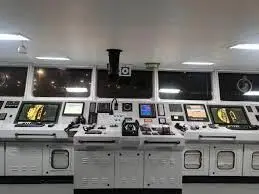
Bridge System Upgrade and Vessel Retrofit Solutions on the Indian Maritime Corridor
1. Executive Summary and Indian Maritime Corridor Context
India handles close to 1.6 billion metric tonnes of cargo annually across its 12 major ports, and the bridge electronics on the vessels calling at these harbours have never been under more scrutiny. The combination of ageing tonnage, tighter flag-state expectations from the Directorate General of Shipping (DGS), stricter survey regimes by the Indian Register of Shipping (IRS), and the IMO’s move towards performance-based navigation has pushed bridge system upgrade from a discretionary capital project into a routine operational necessity. A vessel that arrived at JNPT Nhava Sheva ten years ago with an analogue gyrocompass, a stand-alone radar and a paper chart table is today expected to demonstrate a fully integrated electronic bridge, a type-approved ECDIS, a BNWAS and a heading management system that can be audited end-to-end by the Mercantile Marine Department (MMD).
Seanav Marine has engineered its retrofit practice around this exact pressure point. Every bridge system upgrade delivered to a vessel trading into JNPT Nhava Sheva, Mumbai Port, Chennai Port, Cochin Port, Visakhapatnam Port, Deendayal Port (Kandla), Haldia Port or Mormugao Port is engineered against three references simultaneously — the vessel’s existing class certificate, the latest IRS/IMO circular, and the operational profile of the trade lane. That triangulation is what separates a meaningful vessel retrofit solution from a parts-swap exercise that leaves hidden integration debt on board.
This article is a technical brief for shipowners, technical superintendents, port engineers and Indian surveyors who need to scope, justify and execute a bridge system upgrade without taking the vessel off-hire longer than necessary.
2. Technical Breakdown and Engineering Specifications
A bridge system upgrade is rarely a single piece of equipment. It is a layered engineering change that touches heading reference, position fixing, radar acquisition, chart carriage, watchkeeping alarm, and the human-machine interface that holds it all together. Seanav Marine scopes every retrofit into seven engineering layers, and each layer has a measurable specification.
Layer one — heading reference. The vessel’s gyrocompass remains the SOLAS-mandated primary heading source, and on most Indian-trading tonnage it is either a Sperry Marine Navigat X Mk1/Mk2, a Raytheon Anschütz Standard 22, a Yokogawa CMZ900, a Simrad GC 80/85 or a Tokimec TG series. A gyrocompass upgrade typically involves a master/slave replacement, a new follow-up amplifier stage, modernised serial distribution (NMEA 0183 / IEC 61162-1), and a heading management unit that can rate-monitor multiple sensors for class compliance.
Layer two — speed and position reference. A modern bridge retrofit introduces a multi-GNSS receiver (GPS, GLONASS, BeiDou, IRNSS/NavIC where coverage allows in the Indian Ocean Region), a Speed Log with dual-axis correlation, and an AIS transponder class A that is wired into the Integrated Bridge System.
Layer three — radar acquisition. Radar system retrofit on Indian-trading vessels most often involves migrating a legacy X-band magnetron transceiver to a solid-state coherent transceiver, or replacing a CRT-based radar display with an LCD-based ECDIS-multi-function display combination. Solid-state radar offers a measured detection improvement in clutter, particularly relevant for the monsoon-driven precipitation off Kochi and the dense fishing traffic off Gujarat.
Layer four — chart carriage. ECDIS compliance under SOLAS Ch. V Reg. 19.2.10 is now a hard requirement for most commercial vessels above 3,000 GT on international voyages. The retrofitted ECDIS must carry IHO S-57 ENC data, support S-100 standards where applicable, and be backed up by an independent second ECDIS or a properly maintained paper chart folio.
Layer five — watchkeeping. A compliant BNWAS like the Ninglu BW508 must be installed with the correct dormitory and bridge reset sequence, including the IMO-required three-minute stage.
Layer six — HMI integration. The Integrated Bridge System (IBS) or Integrated Navigation System (INS) is the workstation layer where all the above converge. Cross-brand marine equipment integration is where Seanav Marine’s engineering depth is most visible — a Yokogawa gyrocompass feeding a Furuno radar, an Anschütz heading management unit driving a JRC ECDIS, a Simrad autopilot slaved to a Sperry compass. None of this is plug-and-play, and every cable path is engineered against IEC 61162 serial protocol layers.
Layer seven — alarm and event recording. A VDR/S-VDR upgrade, including a float-free capsule where required, rounds out the bridge system upgrade and provides the post-incident data that the MMD and Indian maritime investigators routinely request.
3. DG Shipping and IRS Classification Standards
India operates a dual compliance regime. SOLAS Ch. V sets the international floor, but the Directorate General of Shipping (DGS) issues M.S. Notices and circulars that frequently tighten the application — for instance, on BNWAS stage intervals, on ECDIS backup arrangements, and on the documentation that must accompany a gyrocompass replacement. The Indian Register of Shipping (IRS) layers its own Rules and Pt.7 surveys on top, including the class survey for navigational equipment that triggers during the Special Survey/Docking window.
Seanav Marine scopes every Indian-flag bridge system upgrade against the latest:
- SOLAS Ch. V Reg. 19 (Carriage requirements for shipborne navigational systems)
- IMO Res. MSC.252(83) — Performance Standards for IBS
- IMO Res. MSC.191(79) — Performance Standards for INS
- IMO Res. MSC.232(82) — ECDIS Performance Standards
- IMO Res. MSC.128(75) — BNWAS
- IEC 60945 (Maritime navigation and radiocommunication equipment – General requirements)
- IEC 61162 (Maritime navigation and radiocommunication equipment – Digital interfaces)
- IRS Rules Pt.7 Ch.4 (Navigational equipment)
DGS-recognised type approval certificates are verified for the gyrocompass, radar, ECDIS and BNWAS before installation is signed off. The SeaNav Marine retrofit pack includes a full type-approval dossier, test reports, calibration certificates and the wiring diagram annotated to IRS standard.
4. Common Equipment Failures and Onboard Root Cause Analysis
Indian-trade vessels present a distinctive failure pattern, driven by heat, humidity, dust ingress at drydock, voltage instability in port, and the long cumulative run-time on ageing bridge electronics. The most common root causes observed by Seanav Marine field engineers include:
Gyrocompass failures. The dominant fault on legacy Sperry Navigat and Anschütz Standard 22 units is sphere support bearing wear, leading to settling time drift and heading errors of more than 0.5°. On Tokimec TG units, the recurring fault is the follow-up motor brush set. On Yokogawa CMZ900 systems, coolant pump degradation leads to sphere temperature drift. Each of these faults is correctable through a planned overhaul rather than a full replacement, which is why gyrocompass service often makes more economic sense than a capex replacement.
Radar transceiver faults. Magnetron end-of-life is the most common X-band radar fault, frequently accompanied by waveguide arcing on Indian-trade tonnage due to salt and dust ingress during shipyard stays. Solid-state radar retrofits eliminate this failure mode but introduce a cooling-fan failure pattern that must be captured in the planned maintenance system.
ECDIS chart data currency. The single largest finding during MMD inspections in Indian ports is expired or missing ENC licences. A bridge system upgrade is the right moment to install a proper chart management workflow with an IHO-licensed distributor.
BNWAS stage fault. BNWAS units frequently fail because the timer is mis-wired, the reset button is placed out of reach of the duty officer, or the dormitory stage has been disabled by the crew. Seanav Marine corrects this through a structured reset-button placement and crew familiarisation during commissioning.
Heading data conflict. When a legacy gyrocompass is left in place and a new GNSS-based heading source (such as a fibre-optic gyro or a dual-antenna GNSS compass) is added, the autopilot and ARPA can flip between sources under manoeuvring, creating dangerous transients. This is the single most important reason why a bridge system upgrade must be scoped as a system, not a parts list.
5. Onboard Inspection, Overhaul and Calibration Procedure
A Seanav Marine bridge retrofit follows a six-stage onboard procedure that has been refined across Indian ports from Kandla to Kolkata.
Stage 1 — Baseline survey. An as-found report is generated covering gyrocompass settling error, radar performance monitor figures, ECDIS chart currency, BNWAS stage timing, autopilot response, and serial data integrity on the IEC 61162 bus. The baseline becomes the measurable acceptance criterion.
Stage 2 — Class and flag documentation review. IRS Pt.7 Ch.4 requirements and the latest DGS circulars are checked against the existing flag and class file. Any class conditions are addressed before the retrofit begins.
Stage 3 — Equipment replacement and integration. The mechanical retrofit — gyrocompass replacement, radar transceiver swap, ECDIS workstation mounting — is executed during the agreed port-stay or dry-dock window. All cable runs are numbered, loomed and labelled to IRS standard. Marine navigation system installation work is witnessed by the attending surveyor where the class scope demands.
Stage 4 — Power-up and data integrity test. Each workstation is powered sequentially. NMEA 0183 / IEC 61162-1 sentence traffic is verified using a Seanav Marine protocol analyser, and heading, position, speed and time are checked for latency and integrity across every consumer.
Stage 5 — Calibration and alignment. Gyrocompass heading alignment is verified against a known celestial or terrestrial reference. Radar alignment is checked using a reference target at a known bearing. ECDIS chart alignment is verified against the corrected radar overlay. Autopilot response is tuned across the vessel’s typical service speed envelope.
Stage 6 — Sea trials and surveyor attendance. A harbour trial followed by a measured-mile sea trial is executed where class scope demands. The IRS surveyor and, where applicable, the MMD surveyor attend, witness trials and endorse the ship’s documentation. The vessel leaves the port fully class- and flag-aligned.
6. Indian Commercial Port Case Study — JNPT Nhava Sheva
A representative case study illustrates the workflow. A 12-year-old bulk carrier of 56,000 DWT, Indian-flag, IRS-classed, arrived at JNPT Nhava Sheva for a cargo working window and was committed to a 14-day retrofit in the same port call. The vessel’s existing bridge comprised a Sperry Marine gyrocompass of indeterminate health, a 2008-vintage X-band radar with a magnetron past half-life, no ECDIS, and an unapproved BNWAS clone.
Seanav Marine executed a gyrocompass service overhaul of the Sperry master unit with new support bearings, a calibrated follow-up motor and a new solid-state master/slave distribution amplifier. A type-approved dual-ECDIS workstation was installed on the chart table with an IHO S-57 ENC licence managed through a 12-month supply contract. The legacy X-band radar was retained but a solid-state coherent radar retrofit was scoped for the next docking. A type-approved Ninglu BW508 BNWAS was installed with the IMO-compliant stage ladder and the correct reset placement.
The vessel cleared the MMD inspection on the second day of cargo work and the IRS surveyor endorsed the Pt.7 survey file. The owner recorded measurable benefits within 90 days: heading-related ARPA errors dropped, the number of chart-related port-state control deficiencies fell to zero, and the crew reported a materially improved bridge ergonomics. The retrofit was financed against the avoided off-hire of an alternative drydock in Singapore.
7. Preventative Maintenance and OEM Compatibility
The fastest way to destroy the value of a bridge system upgrade is to operate it without a structured preventative maintenance regime. Seanav Marine’s marine electronics maintenance approach treats every bridge retrofit as the start of a multi-year service contract, not a transactional install.
Gyrocompass service intervals are aligned to OEM recommendations, supported by the recommended maintenance intervals for the most popular gyro compass reference, with the dominant patterns being 12 months for sphere support bearings, 24 months for follow-up motor brush sets, and 36 months for coolant and pump service on liquid-suspended units.
Radar preventative maintenance is driven by magnetron end-of-life indicators or, on solid-state units, by annual BITE log review. ECDIS preventative maintenance is dominated by chart data licence continuity and conning display calibration. BNWAS preventative maintenance is dominated by stage-timer verification, reset-button function and the annual dock-yard witness test.
OEM compatibility is preserved wherever possible. Seanav Marine holds direct technical relationships with the major navigation OEMs — Sperry Marine, Raytheon Anschütz, Yokogawa, Furuno, JRC, Simrad, Cobham/Sailor — and routes every spare part through OEM-approved distribution so the type approval chain is unbroken. Where third-party system integration crosses an OEM boundary, the interface is engineered against IEC 61162 and documented with a signed integration protocol.
8. Frequently Asked Questions (10–15 FAQs)
Q1. What is the difference between a bridge system upgrade and a simple equipment replacement?
A bridge system upgrade is a layered engineering change covering heading, position, radar, chart carriage, watchkeeping and the human-machine interface, executed with a documented acceptance criterion. A simple equipment replacement is a like-for-like swap without integration scope.
Q2. How long does a typical gyrocompass upgrade take on a vessel alongside at an Indian port?
A planned gyrocompass upgrade, including overhaul, calibration and sea trial, typically takes 48–96 hours alongside. An emergency replacement with a new-master installation can be executed in 24–36 hours.
Q3. Is ECDIS compliance mandatory for Indian-flag vessels?
Yes, under SOLAS Ch. V Reg. 19.2.10, ECDIS is mandatory for most Indian-flag commercial vessels above 3,000 GT on international voyages, with type approval and chart data currency enforced by the DGS.
Q4. Can a legacy gyrocompass remain in service during a bridge system upgrade?
Yes, but it must continue to meet SOLAS Ch. V Reg. 19 performance and be supported by a documented planned maintenance regime. Seanav Marine can assess remaining service life during the baseline survey.
Q5. What is the role of the Indian Register of Shipping in a bridge retrofit?
The IRS is the classification society and endorses the Pt.7 Ch.4 navigational equipment survey file. Most bridge retrofits trigger an IRS survey scope that must be planned in advance.
Q6. Does a bridge system upgrade require an MMD inspection?
Where the change affects flag-issued certificates (for example, the Safe Manning Document or the Cargo Ship Safety Equipment Certificate), an MMD attendance is required and Seanav Marine coordinates the inspection.
Q7. Can Seanav Marine integrate cross-brand equipment, such as an Anschütz gyrocompass with a Furuno ECDIS?
Yes, cross-brand marine equipment integration is a core Seanav Marine capability. All integration is engineered against IEC 61162 and documented with a signed interface protocol.
Q8. What are the most common bridge-related port-state control deficiencies at Indian ports?
Expired ENC licences, non-functional BNWAS stages, gyrocompass heading errors exceeding 0.5°, and radar performance monitor out-of-spec values. All four are addressed in a structured retrofit.
Q9. Is solid-state radar worth retrofitting on an existing vessel?
On most vessels over ten years old trading in dense monsoon weather, a solid-state radar retrofit delivers measurable detection gains in clutter and reduces magnetron-related port-state findings.
Q10. How is a BNWAS retrofitted on an existing bridge?
A type-approved BNWAS like the Ninglu BW508 is installed with the IMO-compliant stage ladder, correct reset placement and a tested dormitory signal path. Commissioning is witnessed by class.
Q11. What is the typical ROI on a bridge system upgrade?
Measured benefits include avoided off-hire, reduced port-state control detentions, lower insurance premiums, and improved fuel efficiency through better autopilot performance. Payback is typically inside 24 months.
Q12. Can a vessel retrofit its bridge during a normal cargo call at JNPT or Chennai?
Yes, provided the port-stay window allows the engineering scope and the surveyor is mobilised. Seanav Marine routinely executes alongside retrofits at JNPT, Mumbai, Chennai and Cochin.
Q13. What chart data standard does a retrofitted ECDIS need to support?
A retrofitted ECDIS must support IHO S-57 ENC data and, where applicable, S-100 product specifications. IHO-licensed distribution is mandatory.
Q14. How does Seanav Marine preserve OEM warranty during a retrofit?
All OEM parts are sourced through approved distribution and installed against OEM service manuals. The OEM warranty chain is documented in the retrofit dossier.
Q15. What is the next step to scope a bridge system upgrade?
The next step is a baseline survey and a written retrofit specification. Enquiries can be directed to seanav.org/contact.
9. Why Choose Seanav Marine India and Call to Action
Seanav Marine combines OEM-grade technical depth with the practical reality of Indian port operations. The same engineering team that services a gyrocompass in Mumbai or executes a multi-workstation Integrated Bridge System retrofit at JNPT also understands the survey cadence of the Indian Register of Shipping, the documentation expectations of the Mercantile Marine Department, and the operational rhythm of cargo work at Chennai, Cochin, Visakhapatnam, Deendayal, Haldia and Mormugao.
Every bridge system upgrade is delivered with a measurable acceptance criterion, an OEM-grade spare parts trail, a class and flag documentation pack, and a planned maintenance contract that protects the capex for the next decade. Whether the requirement is a focused gyrocompass upgrade, an Integrated Bridge System build, or a full vessel retrofit solution that touches every workstation, Seanav Marine is positioned to deliver.
To scope a bridge system upgrade, request a baseline survey or commission a retrofit specification, contact the Seanav Marine engineering desk via https://seanav.org/contact.

Related Gyro Compass Service resources: Gyro Compass Service hub · YDK Technologies MKN020 Gyro compass connection box · Gyro Compass Annual Service, Repair & Supply · Raytheon Anschutz Standard 22 NX Gyro Compass JNPA · Raytheon Anschutz Standard 22 Gyro Compass JNPA · Raytheon Anschutz Standard 20 Gyro Compass JNPA