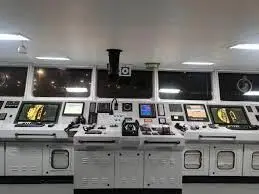
Bridge System Upgrade and Vessel Retrofit Solutions for the UAE Maritime Sector
1. Executive Summary and UAE Fleet Operational Context
Commercial operators calling at Jebel Ali Port, Port Rashid, Khalifa Port, Mina Zayed, Mina Saqr and Port of Fujairah are operating in a port environment that no longer tolerates obsolete bridge electronics. The operational tempo of UAE trade lanes — feeder tonnage from the Arabian Gulf, container flows through DP World terminals, crude and product carrier movements from Fujairah, and ro-ro services via Khor Fakkan — demands navigational decision-making speed that legacy bridge architectures were never designed to deliver. A bridge system upgrade is therefore no longer an elective capital project. It is an operational necessity.
Seanav Marine supports owners, technical managers and masters across the Emirates with structured retrofit programmes that modernise navigation, communication and bridge integration subsystems without taking the vessel out of revenue longer than necessary. Whether the requirement is a single gyrocompass replacement ahead of dry docking in Dubai or a fully engineered Integrated Bridge System (IBS) migration across the entire bridge, Seanav Marine delivers the engineering scope, OEM-neutral integration expertise, and port-side mobilisation that UAE operators expect.
This article sets out the engineering, regulatory and commercial framework for executing a vessel retrofit of bridge electronics in the UAE. It is written for superintendents, fleet managers, marine surveyors and chief engineers who must justify a retrofit capex case to procurement and charterers — and who must also defend the technical integrity of the final installation to classification societies such as DNV, ABS, Lloyd’s Register, Bureau Veritas and ClassNK.
2. Technical Breakdown and Engineering Specifications
A bridge system upgrade is rarely a single transaction. It is a coordinated engineering programme touching multiple subsystems, each governed by international standards under the International Electrotechnical Commission (IEC 60945 for environmental testing, IEC 61162 for digital interfacing) and by IHO standards S-52, S-57 and the emerging S-100 framework for navigational chart carriage.
The primary subsystems addressed during a bridge retrofit include:
- Radar system retrofit. Modern magnetron-free solid-state X-band and S-band radars, such as those built on the Furuno FAR-2xx8 series, JRC JMR-9200, or Raytheon Anschütz Standard 22/30 platforms, replace CRT-era displays with LCD/LED technology, automatic radar plotting aid (ARPA) functionality, and chart overlay. These installations commonly require new scanner cables, tuning unit replacement, and trigger pulse recalibration to maintain the IEC 62388 performance standard.
- ECDIS compliance and migration. The transition from type-approved ECDIS to the IHO S-100 ready generation — including systems built on the Sperry Marine Navigat 100/200 architecture or the Yokogawa CMZ900 series — requires careful chart service migration, route planning workflow updates, and dual-station console retrofit work where the original layout supported only paper chart navigation.
- Gyrocompass upgrade. Fibre-optic gyrocompass (FOG) and ring laser gyrocompass (RLG) retrofits are now standard on vessels trading through UAE ports. These installations replace magnetic-compass-dependent heading systems with units that interface to the Bridge Steering Control Interface System – BSCIS, autopilot, AIS, and dynamic positioning where fitted.
- BNWAS retrofit. The Bridge Navigational Watch Alarm System mandated under SOLAS Chapter V Regulation 19 is often the trigger for a wider bridge upgrade, since the BNWAS must integrate with heading, motion, and watch-keeping sensors. Seanav Marine supplies and integrates systems such as the Ninglu BW508 Bridge Navigational Watch Alarm System across retrofit scopes.
- Integrated Bridge System architecture. Modern IBS deployments consolidate navigation, communication, machinery alarm routing, and propulsion control onto a single Ethernet-based network with NMEA 0183/IEC 61162-450 protocol conversion. This typically involves retrofit of the Bridge Propulsion Control Systems – BPCS, Integrated Bridge Control and Monitoring Systems – IBCMS, and a central alarm management human-machine interface such as the BAM Bridge Alert Management layer.
- Control consoles and ergonomic rebuild. Physical Control Consoles – ECR, Bridge, Cargo Control Room refits frequently accompany the electronic upgrade. IEC 60945-compliant consoles house redundant displays, central processing units, and engineered cable chases that simplify future maintenance access.
Cross-brand marine equipment integration is a defining feature of competent retrofit engineering. Operators routinely ask Seanav Marine to integrate a Furuno radar with a Sperry Marine ECDIS, a Yokogawa gyrocompass, and a JRC BNWAS — an environment that demands protocol-aware interface engineering rather than simple equipment swap-out.
3. SOLAS Chapter V and UAE Flag State Regulations
SOLAS Chapter V Regulation 19 — “Carriage requirements for shipborne navigational systems and equipment” — establishes the binding international framework that governs nearly every bridge system upgrade. It defines the requirements for the carriage of charts, ECDIS, gyrocompass, radar, ARPA, AIS, BNWAS, heading or track control systems, and sound reception. A vessel retrofit must close every gap between the SOLAS-mandated equipment list and the actual fit on the bridge.
The Federal Transport Authority (FTA) of the United Arab Emirates enforces carriage compliance on UAE-flagged vessels, including those engaged in coastal trade and offshore support operations within the Emirates. Surveyors acting on behalf of the FTA conduct periodic inspections that include verification of type-approved equipment, valid calibration certificates, and conformity of the installed configuration to the approved drawings.
The UAE Ministry of Energy and Infrastructure provides the overarching regulatory oversight of maritime safety and seaworthiness, working in conjunction with classification societies. For vessels calling at UAE ports under foreign flag, port state control authorities may issue detention notices where bridge equipment is non-functional or non-compliant. Seanav Marine routinely responds to such findings at Jebel Ali Port and Port Rashid by mobilising a service team within hours to effect corrective retrofit work and present documented compliance evidence.
In practical terms, a Seanav Marine bridge system upgrade scope is engineered against the following compliance baseline:
- Type approval certificates for every navigation and communication device, traceable to the manufacturer and the testing laboratory.
- Software version verification, particularly for ECDIS systems subject to the IHO S-63 chart service scheme and ongoing S-100 readiness updates.
- Cable segregation, bonding, and electromagnetic compatibility in accordance with IEC 60945.
- Interface test records demonstrating correct data exchange between radar, gyrocompass, AIS, VDR, BNWAS and IBS workstations.
- Class survey support, with documentation packages accepted by DNV, ABS, Lloyd’s Register, Bureau Veritas, RINA, ClassNK and Indian Register of Shipping.
4. Common Equipment Failures and Root Cause Analysis
The decision to retrofit a bridge electronics suite is frequently triggered by recurring failure modes that technical superintendents can no longer ignore. The most commonly observed root causes during Seanav Marine port calls at Khor Fakkan Port, Hamriyah Port and Mina Saqr include:
- Display tube degradation on legacy radar and ECDIS units. CRT-based monitors lose luminosity, develop convergence errors, and frequently fail the colour-discrimination test required under SOLAS. The most economical response is full display replacement and console refit rather than repeated board-level repair.
- Gyrocompass sphere depletion and north-seeking failures. Older spinning-mass gyrocompasses lose accuracy as the sphere ages, causing autopilot hunting and AIS heading errors that may trigger port state control findings.
- Serial data bus contention. Legacy NMEA 0183 networks with paralleled listeners suffer voltage drift, dropped sentences, and slow refresh rates on the conning display. Modern protocol conversion to NMEA 2000 or IEC 61162-450 resolves the issue but requires engineered interface replacement.
- Power supply and uninterruptible power supply (UPS) failure. Bridge electronics frequently share a single mains feed without selective breaker segregation. Retrofit scopes that introduce segregated UPS feeds and clean earth bonding markedly reduce unplanned downtime.
- Obsolete chart data services. Vessels still operating unsupported ECDIS models cannot receive updated S-63 chart permits, leaving them non-compliant even though the hardware functions. This single failure mode is one of the strongest triggers for full ECDIS replacement.
A root cause analysis produced during Seanav Marine port calls is structured to map each observed failure to a recommended retrofit intervention, an estimated operational risk reduction, and the class-approved replacement equipment list.
5. Onboard Inspection, Overhaul and Calibration Procedure
Every Seanav Marine bridge system upgrade follows a documented onboard procedure that satisfies classification, flag and port state requirements. The standard methodology proceeds through the following stages:
- Pre-arrival survey. Drawings, existing equipment serial numbers, software versions, and prior survey findings are reviewed. Cable run survey forms are issued to the vessel in advance.
- Port arrival mobilisation. Tools, OEM spares, calibrated test instruments, and interface cables are transported to the berth. Seanav Marine maintains rapid-response kits staged for mobilisation to Dubai Port Marine Services & Inspection Hub, Fujairah Port Marine Services & Inspection Hub and Khor Fakkan Port Marine Services & Inspection Hub.
- Old equipment removal and bonding verification. Legacy units are decommissioned, and bonding, cable segregation and clean earth conditions are confirmed prior to installation of new equipment.
- Installation, cabling and termination. New equipment is installed to OEM instructions, with cable runs following IEC 60092-352 guidance on fire-resistant shipboard cables.
- Interface commissioning. NMEA 0183, NMEA 2000 and IEC 61162-450 links are terminated, and sentence-level testing confirms correct data flow between radar, gyro, AIS, VDR, BNWAS and IBS workstations.
- Calibration and performance verification. Radar performance is verified against IEC 62388. ECDIS route monitoring and chart display are validated against IHO S-52. Gyrocompass heading accuracy is verified using azimuth bearings or differential GPS comparison.
- Sea trials and class survey attendance. Where scope demands, Seanav Marine engineers attend sea trials to confirm autopilot, track control, and integrated navigation performance. Classification surveyors are accompanied to close the retrofit with documented approval.
- Documentation handover. As-fitted drawings, equipment manuals, software backup files, calibration certificates and class survey records are delivered to the technical superintendent in a structured handover pack.
The procedure is engineered so that the vessel’s operational downtime is minimised. Many retrofit scopes — gyrocompass replacement, BNWAS retrofit, ECDIS workstation replacement, and radar display upgrade — can be completed in parallel with cargo operations when the vessel is alongside.
6. Regional Maritime Case Study: Bridge System Upgrade at Fujairah Bunkering Hub
A product tanker operating on the Fujairah bunkering corridor required a complete bridge electronics modernisation ahead of a scheduled docking in the UAE. The vessel was fitted with legacy ARPA radar, an obsolete ECDIS, and an original magnetic-compass-driven heading system that had produced multiple port state control deficiencies during prior calls.
Seanav Marine executed the retrofit scope across five days alongside at Port of Fujairah. The works included the supply and commissioning of a dual-station ECDIS based on a modern S-100 ready platform, replacement of both X-band and S-band radar transceivers with solid-state units, retrofit of a fibre-optic gyrocompass feeding the autopilot and AIS, installation of a Ninglu BW508 BNWAS with motion sensor integration, and refit of the central Integrated Bridge Control and Monitoring System console to consolidate alarm management.
The scope required cross-brand integration between Furuno radar processors, a JRC BNWAS, a Sperry Marine ECDIS, and a Yokogawa gyrocompass. Seanav Marine engineers designed and implemented an IEC 61162-450 backbone network with appropriate protocol conversion, preserving data integrity across all subsystems. Class survey was completed by the attending ABS surveyor alongside, and the vessel departed Fujairah with a fully documented retrofit handover pack and no operational delay to her bunker delivery schedule.
This case study reflects the practical engineering value of a port-side retrofit programme executed by a team that combines OEM fluency with shipyard-level installation discipline.
7. Preventative Maintenance and OEM Compatibility
A bridge system upgrade is the beginning of a new maintenance lifecycle, not the end of a project. Seanav Marine provides structured preventative maintenance programmes that align with class survey windows, manufacturer service intervals, and charter party requirements.
Typical post-retrofit maintenance elements include:
- Annual performance verification of radar, ECDIS, gyrocompass and BNWAS, with traceable test records accepted by DNV, Lloyd’s Register, ABS and Bureau Veritas.
- Software and chart service management for ECDIS, including IHO S-63 chart permit renewal, S-100 migration planning, and firmware version control across the bridge network.
- Calibration drift monitoring for gyrocompass and speed log, with documented comparison against reference systems at every port call.
- OEM compatibility assurance through Seanav Marine’s portfolio of supplier relationships across Furuno, JRC, Raytheon Anschütz, Sperry Marine, Yokogawa, Simrad, Kelvin Hughes and Sailor/Cobham. Spare parts are sourced, certified, and shipped to the vessel in advance of port arrival.
- Obsolescence lifecycle planning, identifying equipment approaching end-of-manufacturer-support and triggering proactive replacement planning in coordination with dry docking schedules.
OEM compatibility is treated as a critical engineering discipline. Seanav Marine verifies type approval, environmental testing, and interface conformance for every component supplied, irrespective of whether the device is purchased directly from the OEM or via a qualified marine electronics distributor.
8. Frequently Asked Questions (FAQs)
Q1. What is the typical duration of a full bridge system upgrade alongside in the UAE?
A complete bridge retrofit covering radar, ECDIS, gyrocompass, BNWAS, IBS and console work typically requires between 60 and 120 hours of alongside work, depending on the vessel age and cable run complexity. Seanav Marine routinely sequences scopes in parallel with cargo operations to minimise operational impact.
Q2. Can a bridge system upgrade be completed during a short port call without entering dry dock?
Yes. The majority of bridge electronics retrofit work is performed during normal alongside operations at Jebel Ali Port, Port Rashid, Mina Zayed, Fujairah, Khor Fakkan, Hamriyah Port or Ruwais Port. Dry docking is only required where structural work, antenna mast modifications, or below-deck cable runs are part of the scope.
Q3. Does Seanav Marine handle class survey attendance for the retrofit?
Yes. Seanav Marine attends class survey on behalf of the owner and presents the documentation package required by DNV, ABS, Lloyd’s Register, Bureau Veritas, ClassNK, RINA or Indian Register of Shipping.
Q4. Is cross-brand integration supported between different OEM equipment?
Yes. Seanav Marine routinely integrates equipment from Furuno, JRC, Raytheon Anschütz, Sperry Marine, Yokogawa, Simrad and Kelvin Hughes on the same bridge, using engineered protocol conversion between NMEA 0183, NMEA 2000 and IEC 61162-450.
Q5. How is ECDIS compliance maintained after a retrofit?
ECDIS compliance is maintained through annual performance verification, ongoing S-63 chart permit renewal, planned migration to S-100 chart services, and firmware update control. Seanav Marine provides this as a managed service under its preventative maintenance framework.
Q6. What is the trigger for replacing rather than repairing legacy radar?
When CRT displays fail colour discrimination, when spares are no longer manufactured, when the magnetron cannot be sourced, or when chart overlay capability is required for safe navigation in UAE waters, replacement becomes more economical than continued repair.
Q7. Are retrofit scopes covered by a warranty?
Yes. Seanav Marine provides warranty terms aligned with the underlying OEM warranty, with extended warranty packages available for owners seeking longer protection periods.
Q8. Can BNWAS retrofit be executed independently of a wider bridge upgrade?
Yes. BNWAS retrofit can be a standalone scope, and Seanav Marine frequently executes it ahead of a flag or class survey window. Where the wider bridge upgrade is planned, BNWAS is incorporated into the integrated scope.
Q9. What port state control deficiencies are most commonly closed by a bridge retrofit?
Common deficiencies closed by retrofit include inoperative radar ARPA, outdated ECDIS chart data, gyrocompass heading inaccuracy, BNWAS absent or inoperative, and AIS heading data missing or incorrect.
Q10. Does Seanav Marine provide sea trials support following the retrofit?
Yes. Sea trials are attended by Seanav Marine engineers when scope demands, including autopilot verification, track control testing, and integrated navigation performance validation.
Q11. How are software licences handled during ECDIS replacement?
Seanav Marine manages the transfer or repurchase of ECDIS chart service licences in coordination with the OEM and the chart service provider, ensuring the vessel continues to receive updated chart data without interruption.
Q12. Can a retrofit be staged across multiple port calls?
Yes. Many owners choose to phase a retrofit across two or three port calls to spread capex and operational impact. Seanav Marine designs phased scopes that preserve interface integrity between stages.
Q13. What is the role of the UAE Federal Transport Authority (FTA) in a retrofit?
The FTA oversees maritime safety compliance for UAE-flagged vessels and may require notification of major bridge modifications. Seanav Marine prepares and submits the required documentation on the owner’s behalf.
Q14. Are spare parts kits recommended following the retrofit?
Yes. Seanav Marine compiles a recommended spares list aligned with the OEM critical components list, the vessel’s trading route, and the time-to-next-docking interval.
Q15. How is obsolescence risk managed for newly installed equipment?
Seanav Marine tracks OEM product lifecycle announcements and provides forward obsolescence planning to the technical superintendent, identifying the optimum replacement window before end-of-manufacturer-support.
9. Why Choose Seanav Marine UAE and Call to Action
Seanav Marine is an OEM-independent marine electronics integrator delivering bridge system upgrade programmes for vessel operators trading through the United Arab Emirates. The company’s value proposition to owners, technical managers and masters rests on three pillars.
First, technical depth. Seanav Marine engineers hold OEM certifications across Furuno, JRC, Raytheon Anschütz, Sperry Marine, Yokogawa and Sailor/Cobham, with cross-brand integration experience that allows the company to engineer coherent navigation suites on vessels of any vintage.
Second, regional presence. Service teams are mobilised from Seanav Marine’s port-side hubs supporting Dubai, Fujairah and Khor Fakkan, with rapid dispatch to Jebel Ali Port, Port Rashid, Khalifa Port, Mina Zayed, Mina Saqr, Hamriyah Port and Ruwais Port.
Third, accountability. Seanav Marine holds itself accountable for class survey attendance, flag state documentation, OEM warranty compliance, and post-retrofit preventative maintenance — all delivered under a single point of contact for the vessel operator.
Owners and technical managers evaluating a vessel retrofit scope are invited to contact Seanav Marine for a confidential engineering review. Submit your vessel particulars, current equipment list, planned port call dates, and target survey window. Seanav Marine will return a structured retrofit proposal including scope of supply, OEM compatibility matrix, class approval pathway, mobilisation timeline, and indicative cost.
Contact Seanav Marine today to scope your bridge system upgrade: https://seanav.org/contact

Related Marine Radar resources: Marine Radar hub · Polar Code Navigation: Icebreaker Radars, Arctic Satcom & Sub-Zero Marine Electronics · Marine Oil Spill Detection (OSD) Radar Systems: Wave Damping Analysis, Thermal Imaging & Service · Litton Marine Radar X-Band X-Band RADAR: Magnetron Replacement, Repair, Maintenance & Spares Guide · Marconi Marine Radar X-Band X-Band RADAR: Magnetron Replacement, Repair, Maintenance & Spares Guide · C. Plath Marine Radar S-Band S-Band RADAR: Magnetron Replacement, Repair, Maintenance & Spares Guide