Description
System Overview & Engineering Architecture
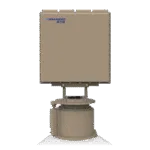
The Highlander Low-Altitude Surveillance Radar represents a significant advancement in maritime surveillance technology, specifically engineered to address the growing challenge of detecting low-flying, small, and slow-moving aerial threats such as drones, seaplanes, and other unconventional targets. Developed by Beijing Highlander Digital Technology Co., Ltd., this system employs a fully solid-state, fully coherent pulse-Doppler architecture that eliminates traditional rotating parabolic antennas in favor of electronically steered arrays combined with optional mechanical scanning.
This dual-mode operational approach allows the radar to maintain persistent situational awareness while adapting to varying mission profiles. The engineering design emphasizes reliability in harsh marine environments, incorporating industrial-grade components rated for extreme temperatures and high humidity exposure typical in offshore and coastal operations.
The system’s modular architecture facilitates integration with existing bridge systems and command-and-control networks. Its compact form factor enables installation on vessels where space constraints limit the deployment of larger surveillance radars. The radar interfaces through standard maritime protocols, supporting data export via Ethernet and serial connections for seamless incorporation into broader surveillance ecosystems.
Core Features & Operational Advantages
All-Weather Continuous Operation
Operating effectively in all weather conditions, the Highlander Low-Altitude Surveillance Radar maintains consistent performance regardless of precipitation, fog, or sea state. This capability ensures uninterrupted monitoring during critical transit periods or when navigating through congested waterways where low-altitude threats may emerge unexpectedly.
Advanced Target Detection Capabilities
With a detection range exceeding 5 kilometers against targets with a radar cross-section (RCS) as small as 0.01㎡, the system excels at identifying micro-UAVs and other minimal-signature objects. The blind zone is minimized to ≤150 meters, reducing coverage gaps near the vessel. The minimum detection altitude of ≤10 meters enables reliable tracking of surface-skimming projectiles and very low-flying aircraft.
Dual Scanning Modes
The radar supports both mechanical scanning and 2D electronic scanning, offering operational flexibility:
- Mechanical Scanning: Provides full 360° azimuth coverage with elevation adjustable from 0° to 80°
- Electronic Scanning: Offers rapid beam steering within ±45° azimuth and 0°–80° elevation
- Frequency Band: X-Band
- Detection Range: ≥5km (RCS: 0.01㎡, UAV)
- Blind Zone: ≤150m
- Operating Mode: Mechanical scanning + 2D electronic scanning
- Search Coverage:
- Tracking Function: Mechanical scanning tracking / TAS with electronic scanning
- TAS Tracking Targets: ≥6
- Minimum Detection Altitude: ≤10m
- Velocity Range: 1m/s ~ 100m/s
- Target Update Rate: Mechanical ≤3.2s / Electronic ≤3s
- Resolution: Range ≤15m, Azimuth ≤6°, Elevation ≤6°
- Search Accuracy (RMS): Range ≤10m, Azimuth ≤0.4°, Elevation ≤0.5°
- Tracking Accuracy (RMS): Range ≤10m, Azimuth ≤0.3°, Elevation ≤0.4°
- Target Capacity: ≥500 tracks
- Weight: ≤26kg
- Power Supply: AC220V / DC24V
- Power Consumption: ≤350W
- Operating Temperature: -40℃ ~ +70℃
- Dimensions: ≤575mm × 317mm × 220mm
- Ingress Protection: IP66
- Adherence to IMO MSC.191(79) performance standards for radar systems
- Compatibility with IEC 62388 standards for maritime radar installations
- Integration readiness with SOLAS Chapter V Regulation 19 requirements for shipborne navigational systems
- Support for ITU-R M.1174 recommendations on radar characteristics
- Visual inspection: Monthly
- Functional test: Quarterly
- Comprehensive diagnostic check: Annually
- Firmware updates: As released by manufacturer
This hybrid approach optimizes power efficiency and response time while maintaining comprehensive spatial coverage.
Intelligent Tracking Functions
The system includes robust tracking algorithms capable of handling multiple simultaneous targets. With TAS (Track-While-Scan) functionality available in both scanning modes, it can maintain tracks on ≥6 high-priority targets while managing up to ≥500 total tracks. Update rates are optimized for real-time responsiveness—≤3.2 seconds for mechanical scanning and ≤3 seconds for electronic scanning.
Environmental Resilience
Built to withstand demanding operational conditions, the radar operates across a wide temperature range (-40℃ to +70℃) and meets IP66 ingress protection standards, ensuring resistance to dust ingress and powerful water jets. These characteristics make it suitable for exposed deck mounting or integration into enclosed bridge structures.
Component Breakdown & Technical Specifications
| Component | Description |
|---|---|
| Antenna Array | Solid-state phased array with integrated transmit/receive modules |
| Signal Processor | Fully coherent pulse-Doppler processor with digital beamforming |
| Control Unit | Embedded computing platform running real-time tracking software |
| Power Module | Universal AC/DC converter supporting 220V AC and 24V DC inputs |
| Enclosure | Ruggedized housing with IP66 sealing and thermal management |
Key Performance Metrics
– Mechanical: Azimuth 0°~360°, Elevation 0°~80°
– Electronic: Azimuth -45°~45°, Elevation 0°~80°
SOLAS, IMO, IEC & Classification Society Compliance
The Highlander Low-Altitude Surveillance Radar is designed to meet the stringent requirements set forth by international maritime regulations, particularly those outlined in SOLAS Chapter V regarding navigational safety and collision avoidance. While specific certification details should be verified during procurement, the system’s architecture aligns with guidelines for radar-based surveillance equipment used in maritime domains.
Compliance considerations include:
For vessels operating under classification societies such as DNV, ABS, Lloyd’s Register, or the Federal Transport Authority (FTA) in the UAE, this radar provides a foundation for meeting regulatory expectations related to enhanced situational awareness and threat detection.
Onboard Maintenance & Inspection Standards
Routine maintenance of the Highlander Low-Altitude Surveillance Radar involves periodic inspection of external surfaces for signs of corrosion or physical damage, cleaning of protective covers, and verification of cable connections. Internal diagnostics can be accessed through the control interface to monitor component health and signal integrity.
Recommended inspection intervals:
All maintenance activities should be performed by qualified technicians familiar with solid-state radar systems. Calibration procedures must adhere to manufacturer specifications and relevant maritime authority guidelines.
Technical Support, Spare Parts & Quotation Call to Action
Seanav Marine serves as the authorized regional partner for Highlander marine electronics across the UAE and surrounding territories. Our technical team offers comprehensive support including installation guidance, commissioning services, crew training, and ongoing maintenance contracts tailored to vessel operational needs.
We maintain an inventory of critical spare parts and consumables to ensure minimal downtime. Whether you require replacement components, firmware upgrades, or expert consultation on system optimization, our engineers provide prompt assistance backed by direct access to manufacturer resources.
For inquiries regarding pricing, availability, or customized configurations, please reach out to our technical sales division:
Request a Quote / Contact Seanav Marine Technical Team
Alternatively, explore our full portfolio of marine radar systems and related navigation solutions designed to enhance vessel safety and operational efficiency.
Frequently Asked Questions
Frequently Asked Questions
Q1: What type of targets can the Highlander Low-Altitude Surveillance Radar detect?
A: The radar is optimized for detecting “low, small, and slow” targets including UAVs, drones, seaplanes, and other minimal-signature aerial objects with an RCS as small as 0.01㎡.
Q2: Is this radar suitable for marine environments?
A: Yes, the system features IP66 ingress protection and operates reliably from -40℃ to +70℃, making it ideal for harsh marine conditions including salt spray and high humidity.
Q3: Can the radar track multiple targets simultaneously?
A: Yes, it supports TAS tracking of ≥6 priority targets and manages up to ≥500 total tracks with update rates of ≤3.2s (mechanical) or ≤3s (electronic).
Q4: Does the system support both mechanical and electronic scanning?
A: Yes, the radar operates in dual mode—mechanical scanning (360° azimuth, 0°–80° elevation) and 2D electronic scanning (-45° to +45° azimuth, 0°–80° elevation).
Q5: What are the power requirements for this radar?
A: It accepts AC220V or DC24V input with maximum power consumption of ≤350W.
Q6: How compact is the installation footprint?
A: The unit weighs ≤26kg and measures ≤575mm × 317mm × 220mm, allowing flexible mounting options on various vessel types.
Q7: Is the radar compliant with SOLAS regulations?
A: The system is engineered to align with SOLAS Chapter V and IMO performance standards for maritime surveillance radars. Specific certifications should be confirmed during procurement.
Q8: What maintenance is required for optimal operation?
A: Routine visual inspections monthly, functional tests quarterly, and annual comprehensive diagnostics are recommended. All servicing should be conducted by certified technicians.
Q9: Where can I obtain spare parts or technical support?
A: Seanav Marine provides regional support, spare parts, and technical services across the UAE. Contact us at https://seanav.org/contact for assistance.
Q10: Can this radar integrate with existing bridge systems?
A: Yes, it supports standard maritime interfaces including Ethernet and serial data outputs for integration with ECDIS, VDR, and other bridge systems.