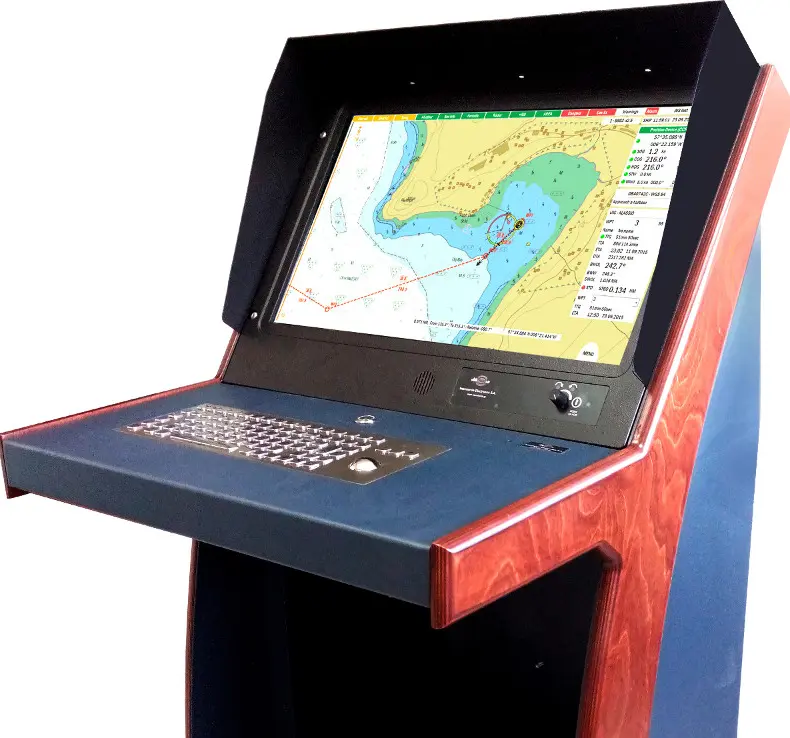
Description
SAILOR 6110 mini-C GMDSS – Next-Generation Maritime Safety Terminal
The SAILOR 6110 mini-C GMDSS represents a genuine next-generation safety solution from Cobham SATCOM, engineered to meet the evolving demands of modern maritime operations. This integrated terminal consolidates three critical maritime safety and monitoring functions — GMDSS (Global Maritime Distress and Safety System), SSAS (Ship Security Alert System), and LRIT (Long Range Identification and Tracking) — into a single compact platform, reducing bridge clutter and simplifying vessel compliance with international regulatory frameworks.
As a cornerstone of onboard communication and distress infrastructure, the SAILOR 6110 mini-C is designed to support vessel operators in meeting the stringent requirements set forth by the International Maritime Organization (IMO) and the International Convention for the Safety of Life at Sea (SOLAS). The system is purpose-built for vessels requiring reliable, efficient, and accurate maritime communication across Inmarsat-C satellite networks, ensuring continuous connectivity for distress alerting, safety messaging, and vessel tracking.
—
System Overview & Engineering Architecture
The SAILOR 6110 mini-C GMDSS is engineered around a modular and compact architecture that integrates satellite communication, data processing, and user interface functionalities into a unified unit. The system leverages Inmarsat-C satellite services to deliver bidirectional messaging, distress alerting, and fleet communication capabilities essential for vessels operating in international waters.
At its core, the terminal is designed to provide seamless integration of GMDSS distress and safety communication, SSAS covert security alerting, and LRIT periodic position reporting — all managed through a single operational interface. This integrated approach reduces the need for multiple standalone devices on the bridge, optimizes panel space, and simplifies crew training and operational procedures.
The engineering architecture emphasizes signal integrity and operational reliability, with cabling innovation at the forefront of the design philosophy. The streamlined cabling solution minimizes installation complexity, reduces potential failure points, and facilitates efficient routing within the vessel’s machinery and bridge spaces. This design consideration is particularly valuable during newbuild installations and retrofit projects where space and wiring efficiency are critical factors.
—
Core Features & Operational Advantages
Cabling Innovation
The SAILOR 6110 mini-C incorporates a cabling innovation that simplifies installation and enhances long-term reliability. By optimizing the cable architecture, the terminal reduces the number of individual connections required, lowering the risk of intermittent faults and easing the burden on vessel electrical technicians during routine maintenance and troubleshooting. This innovation contributes to faster commissioning timelines and reduced downtime during service intervals.
Touchscreen Operation
An intuitive touchscreen interface forms the primary operational control surface for the SAILOR 6110 mini-C GMDSS. The touchscreen enables crew members to navigate system menus, configure communication parameters, initiate distress alerts, and monitor SSAS and LRIT statuses with minimal training overhead. The graphical interface is designed for clarity and ease of use under maritime operating conditions, supporting efficient day-to-day bridge operations and rapid response during emergency scenarios.
Reliable and Accurate Performance
The SAILOR 6110 mini-C is built around a foundation of reliable and accurate performance, ensuring that critical safety and security functions operate consistently under all sea conditions. The terminal’s design prioritizes signal reception quality, message delivery confirmation, and positional accuracy for LRIT reporting. This reliability is essential for maintaining continuous compliance with SOLAS mandates and ensuring that distress alerts and security notifications are transmitted without delay or error.
Efficient Communication
Efficient communication is a defining characteristic of the SAILOR 6110 mini-C GMDSS. The terminal supports high-throughput Inmarsat-C data services, enabling the transmission of both safety-related messages and routine operational communications. The efficient communication architecture ensures that vessel operators can maintain contact with shore-based operations, port authorities, and rescue coordination centers (RCCs) with minimal latency and optimal use of satellite bandwidth.
—
GMDSS, SSAS & LRIT Functional Capabilities
GMDSS Compliance
The SAILOR 6110 mini-C fulfills the GMDSS requirements for vessels equipped with Inmarsat-C terminal capabilities. The system supports digital selective calling (DSC), direct printing telegraph (DPT), and satellite emergency position indicating radio beacon (EPIRB) link functions as applicable to Inmarsat-C based GMDSS installations. This ensures that the vessel can transmit and receive distress alerts, maritime safety information (MSI), and on-scene communication through the Inmarsat satellite constellation.
For a comprehensive understanding of GMDSS equipment requirements and installation standards, refer to Seanav Marine’s GMDSS – Global Maritime Distress Safety System equipment list in-depth guide.
SSAS Integration
The Ship Security Alert System (SSAS) functionality embedded within the SAILOR 6110 mini-C enables covert transmission of security alerts to designated shore authorities in the event of a piracy or armed robbery incident. The system is designed to operate discreetly, ensuring that alerts are transmitted without alerting intruders on board. This capability is a critical component of the International Ship and Port Facility Security (ISPS) Code requirements for applicable vessels.
LRIT Reporting
Long Range Identification and Tracking (LRIT) capability allows the SAILOR 6110 mini-C to periodically transmit vessel position data to the vessel’s flag state and coastal surveillance authorities. This function supports maritime domain awareness, vessel traffic monitoring, and compliance with the LRIT Data Collection System (DCS) requirements established by the IMO.
—
SOLAS, IMO & Classification Society Compliance
The SAILOR 6110 mini-C GMDSS is designed to support compliance with the following international maritime regulatory frameworks:
- SOLAS Chapter IV — Radio communications provisions for GMDSS-equipped vessels
- IMO Resolutions pertaining to GMDSS system performance standards and Inmarsat-C terminal type approval
- IMO LRIT Resolution — Long Range Identification and Tracking Data Collection System requirements
- ISPS Code — Ship Security Alert System provisions for maritime security
- Periodic inspection of the touchscreen interface and control panel for operational integrity
- Verification of cabling connections and connector integrity as part of scheduled bridge equipment surveys
- Functional testing of GMDSS distress alerting, SSAS, and LRIT reporting capabilities
- Software and firmware updates as released by the manufacturer to maintain compliance with current operational standards
- Antenna system inspection and coaxial cable integrity checks for optimal satellite signal reception
- GMDSS – Global Maritime Distress Safety System explained operations
- GMDSS – Global Maritime Distress Safety System components training
- Marine Inmarsat-C Repair service in JNPA
- GMDSS – Global Maritime Distress Safety System radio systems MF HF VHF
- GMDSS – Global Maritime Distress Safety System communication EPIRB
The terminal is developed to meet the type approval and performance standards required by major Classification Societies and Flag State Administrations. Vessel operators should verify specific class notation requirements with their Classification Society (such as DNV, ABS, or Lloyd’s Register) and Flag State Authority during the procurement and installation planning phase.
For detailed guidance on SOLAS compliance for GMDSS equipment, visit Seanav Marine’s GMDSS – Global Maritime Distress Safety System basics SOLAS compliance resource page.
—
Onboard Maintenance & Inspection Standards
Routine maintenance of the SAILOR 6110 mini-C GMDSS should be conducted in accordance with the manufacturer’s recommended service intervals and the vessel’s approved maintenance plan. Key maintenance considerations include:
Seanav Marine provides professional Marine GMDSS Repair service in JNPA and supports vessel operators across the UAE, including ports such as Jebel Ali Port, Port Rashid, Khalifa Port, Port of Fujairah, and Khor Fakkan. Our certified marine electronics technicians are equipped to service, calibrate, and maintain SAILOR 6110 mini-C terminals to OEM standards.
—
Technical Support & Port Delivery
Seanav Marine offers end-to-end support for the SAILOR 6110 mini-C GMDSS, including procurement, installation supervision, commissioning, and ongoing technical maintenance. Our team serves vessel operators calling at all major UAE ports and provides technical assistance across the Gulf region.
For inquiries regarding availability, pricing, installation scheduling, or technical specifications for the SAILOR 6110 mini-C GMDSS, please contact the Seanav Marine Technical Team at service@seanav.org or visit our Contact Page.
—
—
Related Seanav Marine Resources
Technical Specifications
| Parameter | Specification |
|---|---|
| Product Model | SAILOR 6110 mini-C GMDSS |
| Manufacturer | Cobham SATCOM |
| Primary Function | GMDSS Terminal (Inmarsat-C) |
| Integrated Functions | GMDSS, SSAS, LRIT |
| Satellite Network | Inmarsat-C |
| User Interface | Touchscreen Operation |
| Cabling Design | Innovative Cable Architecture |
| Key Feature – Reliability | Reliable and Accurate Performance |
| Key Feature – Communication | Efficient Communication |
| Design Generation | Next-Generation Safety Solution |
| Regulatory Framework | SOLAS Chapter IV, IMO Resolutions |
| Security Compliance | ISPS Code (SSAS) |
| Tracking Compliance | IMO LRIT Data Collection System |
| OEM Product Page |
Frequently Asked Questions
1. What functions does the SAILOR 6110 mini-C GMDSS provide?
The SAILOR 6110 mini-C GMDSS integrates three core functions: GMDSS (Global Maritime Distress and Safety System) for distress alerting and safety communication, SSAS (Ship Security Alert System) for covert security alerts under the ISPS Code, and LRIT (Long Range Identification and Tracking) for periodic vessel position reporting to flag state authorities.
2. What satellite network does the SAILOR 6110 mini-C use?
The SAILOR 6110 mini-C operates on the Inmarsat-C satellite network, providing bidirectional messaging, distress alerting, and data communication capabilities for vessels in international waters.
3. How does the touchscreen operation benefit crew usage?
The intuitive touchscreen interface allows crew members to navigate system menus, configure communication parameters, initiate distress alerts, and monitor SSAS and LRIT statuses with minimal training, supporting efficient bridge operations and rapid emergency response.
4. What is meant by the cabling innovation in the SAILOR 6110 mini-C?
The cabling innovation refers to an optimized cable architecture that reduces the number of individual connections required, simplifies installation, lowers potential failure points, and eases maintenance and troubleshooting for vessel electrical technicians.
5. Is the SAILOR 6110 mini-C compliant with SOLAS requirements?
Yes, the SAILOR 6110 mini-C GMDSS is designed to support compliance with SOLAS Chapter IV radio communications provisions and relevant IMO resolutions for Inmarsat-C based GMDSS installations.
6. Does the SAILOR 6110 mini-C support Ship Security Alert System (SSAS)?
Yes, the terminal includes integrated SSAS functionality that enables covert transmission of security alerts to designated shore authorities, supporting compliance with the ISPS Code for applicable vessels.
7. What is LRIT and how does the SAILOR 6110 mini-C support it?
LRIT (Long Range Identification and Tracking) is an IMO-mandated system for periodic vessel position reporting. The SAILOR 6110 mini-C supports LRIT reporting to the vessel’s flag state and coastal surveillance authorities in compliance with the LRIT Data Collection System requirements.
8. Where can I get technical support or repair service for the SAILOR 6110 mini-C in the UAE?
Seanav Marine provides professional technical support, repair, and maintenance services for the SAILOR 6110 mini-C GMDSS across the UAE, including Jebel Ali Port, Port Rashid, Khalifa Port, Port of Fujairah, and Khor Fakkan. Contact Seanav Marine at service@seanav.org or visit the Seanav Contact Page for assistance.