Description
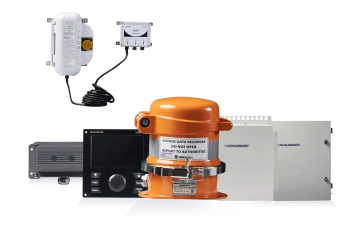
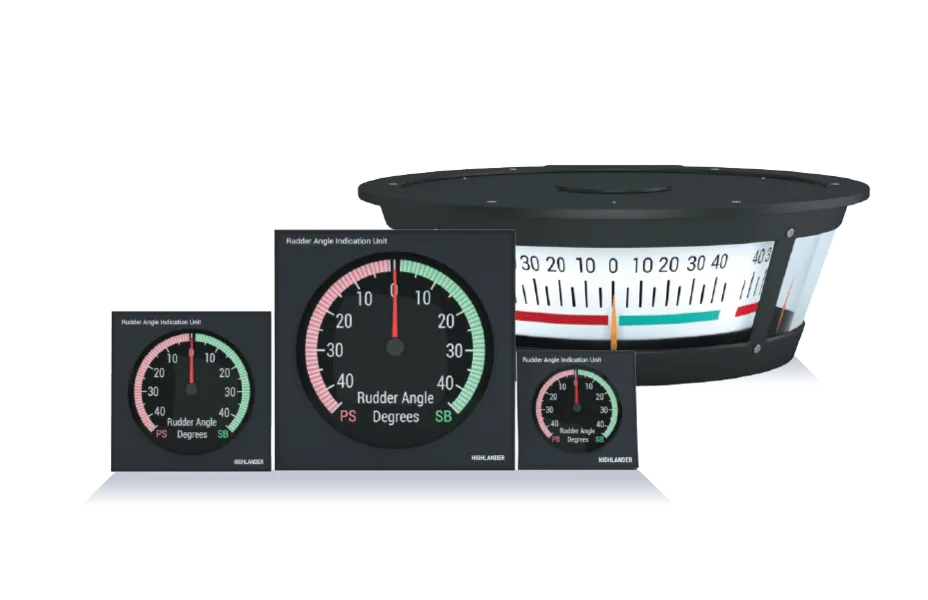
The Highlander HLD-RAIS 100 is a commercial rudder angle indication system comprising a heavy-duty mechanical rudder angle transmitter (RAT), a three-face panoramic wheelhouse indicator, and bridge-wing slave meters with 0.5-degree accuracy.
Highlander HLD-RAIS 100 Rudder Angle Indication System
The Highlander HLD-RAIS 100 Rudder Angle Indication System is a fully digital solution engineered to accurately display the direction and angular position of a vessel’s rudder blade. Designed for modern maritime environments, this system integrates seamlessly into bridge and engine room configurations, delivering real-time rudder angle data to support safe and efficient navigation.
System Overview & Engineering Architecture
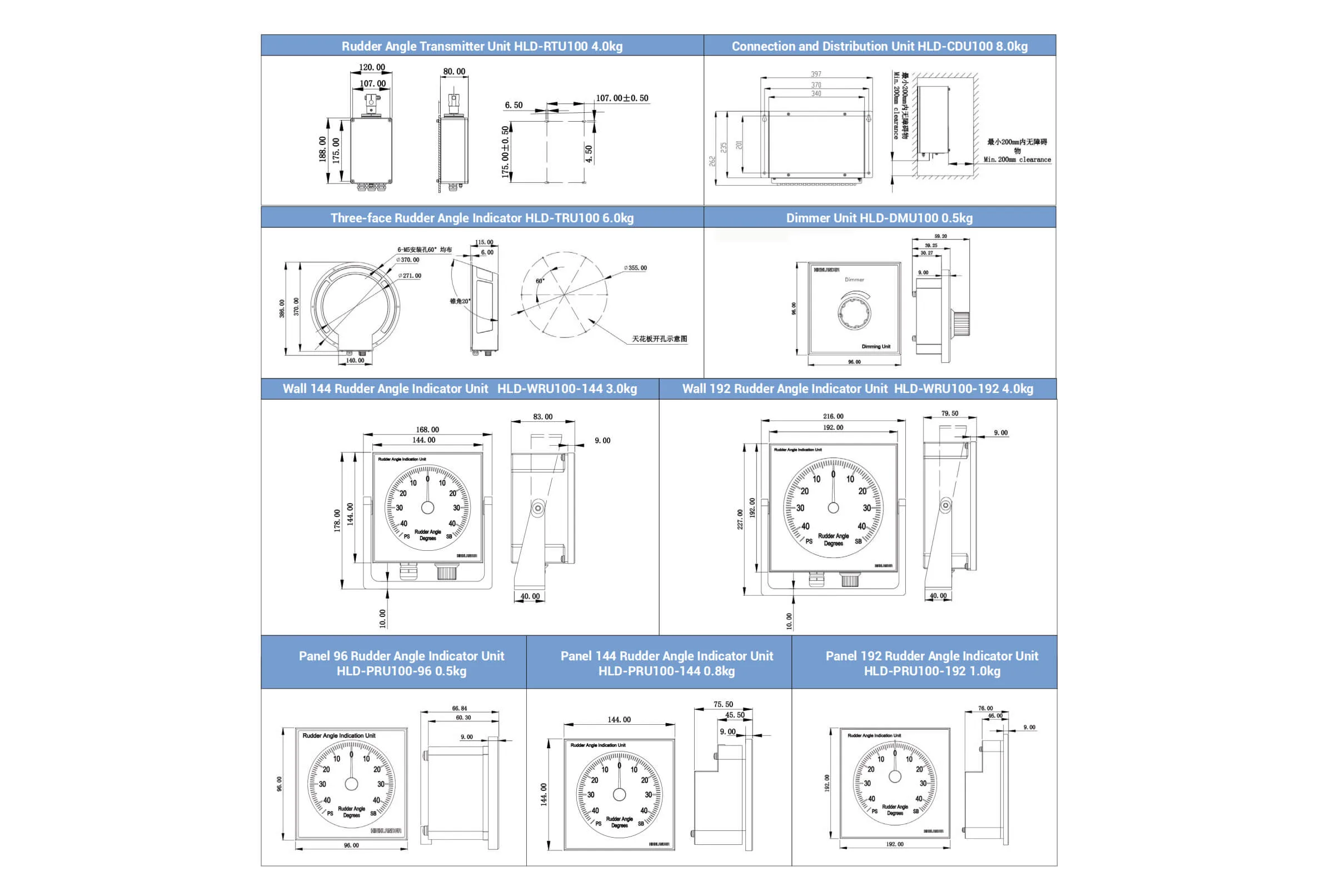
The HLD-RAIS 100 operates on a modular architecture consisting of three core components:
- Rudder Angle Transmission Unit (HLD-RTU100) – Converts the mechanical rudder angle into an electrical signal.
- Connection and Distribution Unit (HLD-CDU100) – Distributes the rudder angle information to all required display locations.
- Indicating Units – Pointer-based indicators that visually present the rudder angle and direction.
- Fully Digital Design: Uses IEC 61162 communication protocol for high reliability and interference resistance.
- Flexible & Scalable Configuration: Supports up to 8 rudder angle indicators; suitable for single-rudder and twin-rudder systems across container ships, bulk carriers, yachts, fishing boats, and workboats.
- High Precision Indication: Accuracy better than 0.5° with a damping time of less than 3 seconds.
- Elegant Appearance: Compact design with excellent night-vision performance and customizable instrument panels.
- Quick Installation: Features unique online calibration and correction technology for fast commissioning.
- Supports Self-Dimming: Offers automatic, remote, or group dimming options.
- Automatic Switching: Provides rudder angle data and system status to VDR or other equipment.
- Redundant Power Supply: Supports simultaneous connection to main power (AC110/220V) and emergency power (DC24V) with automatic changeover.
- Alarm Integration: System failures trigger both visual and volt-free contact alarms, complying with IMO Resolution A.1021.
- Performance Standards: Complies with ISO 20673-2007, IMO Resolution A.1021, and MSC.64(67).
- EMC/EMI: Certified to IEC 60945 Ed.4.0 (2002).
- Power Supply: Main power AC110/220V, 50Hz; emergency power DC24V; dual inputs with automatic changeover; power consumption under 30W.
- Interface: Up to 8 rudder angle indicators; 2 × IEC 61162 status outputs for VDR; 1 × volt-free alarm contact for system failure.
- Scale Range: ±35°, ±45°, or ±65°; minimum scale division of 1°.
- Accuracy: Better than 0.5°.
- Damping Time: Less than 3 seconds.
- Visual inspection of indicator displays and mechanical linkages.
- Verification of IEC 61162 communication integrity.
- Testing of alarm functions and volt-free contacts.
- Calibration checks using the system’s built-in online calibration feature.
- Power supply redundancy testing (main and emergency).
All data transmission between modules utilizes standard IEC 61162 sentences, ensuring robust digital communication with high immunity to electromagnetic interference. This fully digital design enhances system reliability and simplifies integration with other onboard systems such as the Electronic Chart Display and Information System (HLD-ECDIS 600) and Solid State Navigation Radar (HLD-RADAR 900S).
Core Features & Operational Advantages
Component Breakdown & Technical Specifications
| Component | Type | Dimensions (mm) | Weight (kg) | Installation | Protection Rating |
|---|---|---|---|---|---|
| Rudder Angle Transmission Unit | HLD-RTU100 | 188 × 120 × 80 | 4 | Wall mounting | IP56 |
| Connection and Distribution Unit | HLD-CDU100 | 340 × 235 × 120 | 8 | Flat mounting | IP22 |
SOLAS, IMO, IEC & Classification Society Compliance
The HLD-RAIS 100 meets stringent international maritime standards:
This system is approved for use on vessels operating under the authority of major classification societies including DNV, ABS, Lloyd’s Register, and the Federal Transport Authority (FTA) of the UAE, aligning with SOLAS Chapter V requirements.
Ongoing Maintenance & Inspection Standards
To ensure continued compliance and optimal performance, the HLD-RAIS 100 should undergo periodic inspection as part of the vessel’s scheduled maintenance program. Key maintenance activities include:
For vessels calling at key logistics ports such as Jebel Ali Port, Port Rashid, Khalifa Port, Port of Fujairah, and Khor Fakkan, Seanav Marine offers comprehensive support services including calibration, repair, and spare parts supply.
Technical Support & Port Delivery
Seanav Marine provides end-to-end technical support for the HLD-RAIS 100, including installation guidance, commissioning, troubleshooting, and ongoing maintenance. Our team is available to assist with integration into existing ship networks and compatibility with systems like the HIGHLANDER VDR 600 and HLDB2 VDR and HLDS2 SVDR. For inquiries regarding pricing, availability, or technical consultation, please contact our technical team at Contact Seanav Marine Technical Team.
For full manufacturer details, refer to the .
Frequently Asked Questions
Frequently Asked Questions
Q1: What is the primary function of the HLD-RAIS 100 Rudder Angle Indication System?
A1: The HLD-RAIS 100 displays the direction and angle of a vessel’s rudder blade by converting the rudder angle signal into an electrical signal and transmitting it to indicating units located throughout the vessel.
Q2: Is the HLD-RAIS 100 a fully digital system?
A2: Yes, the HLD-RAIS 100 is a fully digital rudder angle indication system that uses standard IEC 61162 sentences for communication between modules.
Q3: What are the power supply requirements for the HLD-RAIS 100?
A3: The system supports main power AC110/220V, 50Hz and emergency power DC24V with dual inputs and automatic changeover. Power consumption is less than 30W.
Q4: How many rudder angle indicators can be connected to the system?
A4: Up to 8 rudder angle indicators can be connected to the HLD-RAIS 100 system.
Q5: What is the accuracy of the rudder angle indication?
A5: The indication accuracy is better than 0.5°, with a damping time of less than 3 seconds.
Q6: Does the HLD-RAIS 100 comply with IMO standards?
A6: Yes, it complies with IMO Resolution A.1021, MSC.64(67), and ISO 20673-2007 standards.
Q7: Can the HLD-RAIS 100 be used on twin-rudder vessels?
A7: Yes, the system supports flexible and scalable configuration suitable for both single-rudder and twin-rudder systems.
Q8: What happens during a system failure?
A8: In the event of a system failure, both visual and contact (volt-free) alarms are triggered, meeting the requirements of IMO Resolution A.1021.
Q9: Where are rudder angle indicating units typically installed?
A9: Indicating units are normally installed in the steering gear room, engine control room, bridge, and port and starboard wings.
Q10: Does the system support dimming functions?
A10: Yes, the HLD-RAIS 100 supports automatic dimming, remote dimming, or group dimming.
Frequently Asked Technical Questions
What are the main components of the Highlander HLD-RAIS 100 system?
The system includes the Rudder Angle Transmitter (RAT) fitted at the steering tiller, connecting linkage rod, three-face overhead panoramic indicator, and bridge wing watertight indicators.
Manufacturer documentation and compatibility
Select the exact model, hardware generation and document revision. Before ordering, confirm the equipment interfaces, power requirements, required approvals and included accessories against the applicable manufacturer documentation. Send nameplate photographs, the installed equipment details, vessel name, port and ETA with your enquiry.