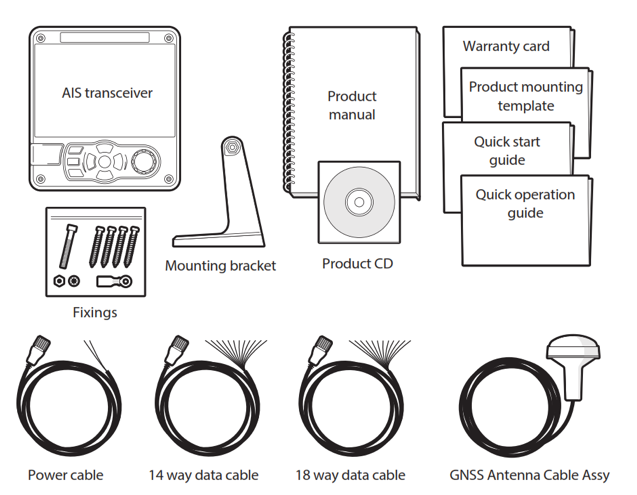
Description
System Overview & Engineering Architecture
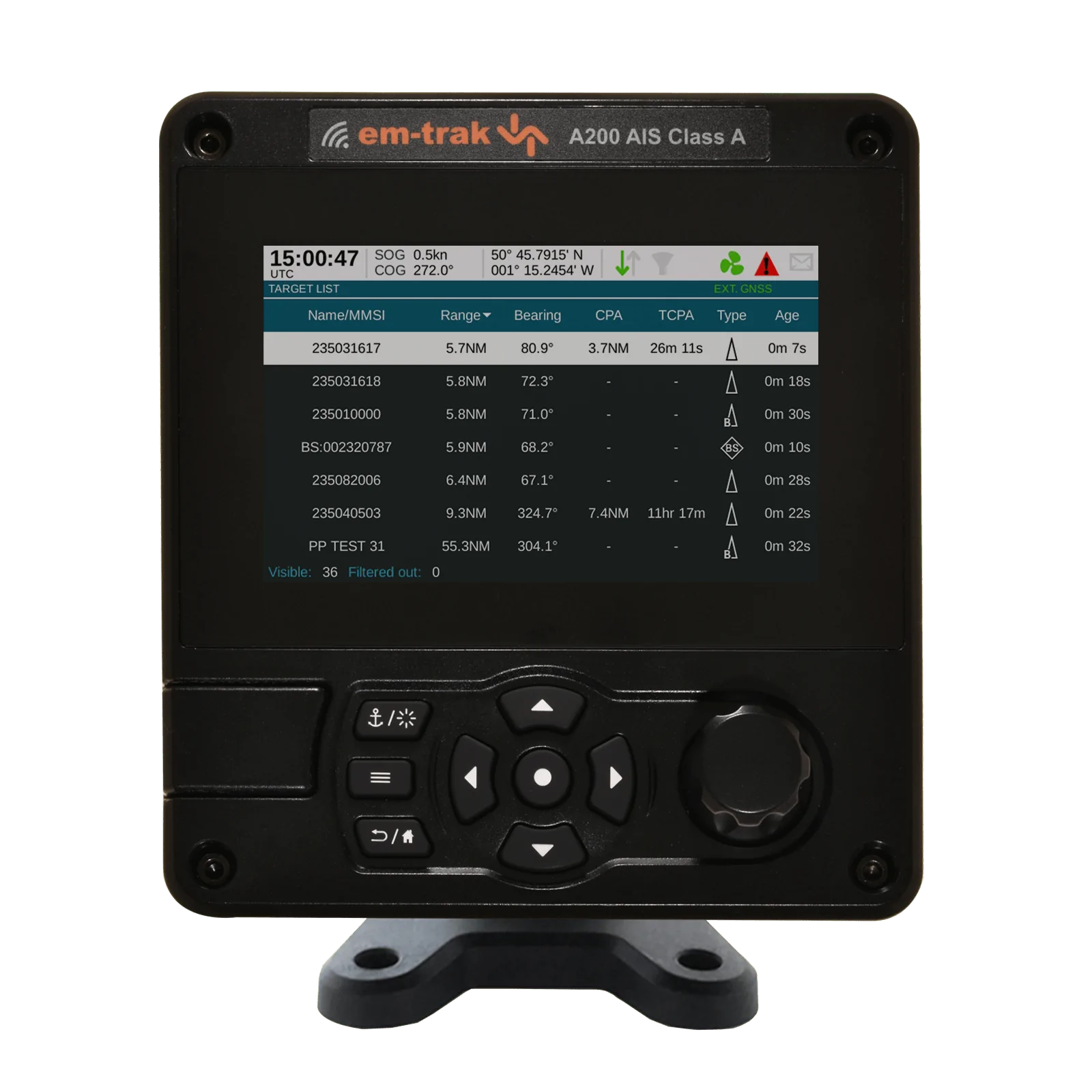
The Em-Track A200 Class A AIS is an Automatic Identification System transponder engineered for marine vessel identification, tracking, and situational awareness. As a Class A AIS unit, the A200 is designed to transmit and receive AIS data messages in accordance with the ITU-R M.1371 recommendation, enabling vessel-to-vessel and vessel-to-shore communication for collision avoidance, traffic monitoring, and navigational safety.
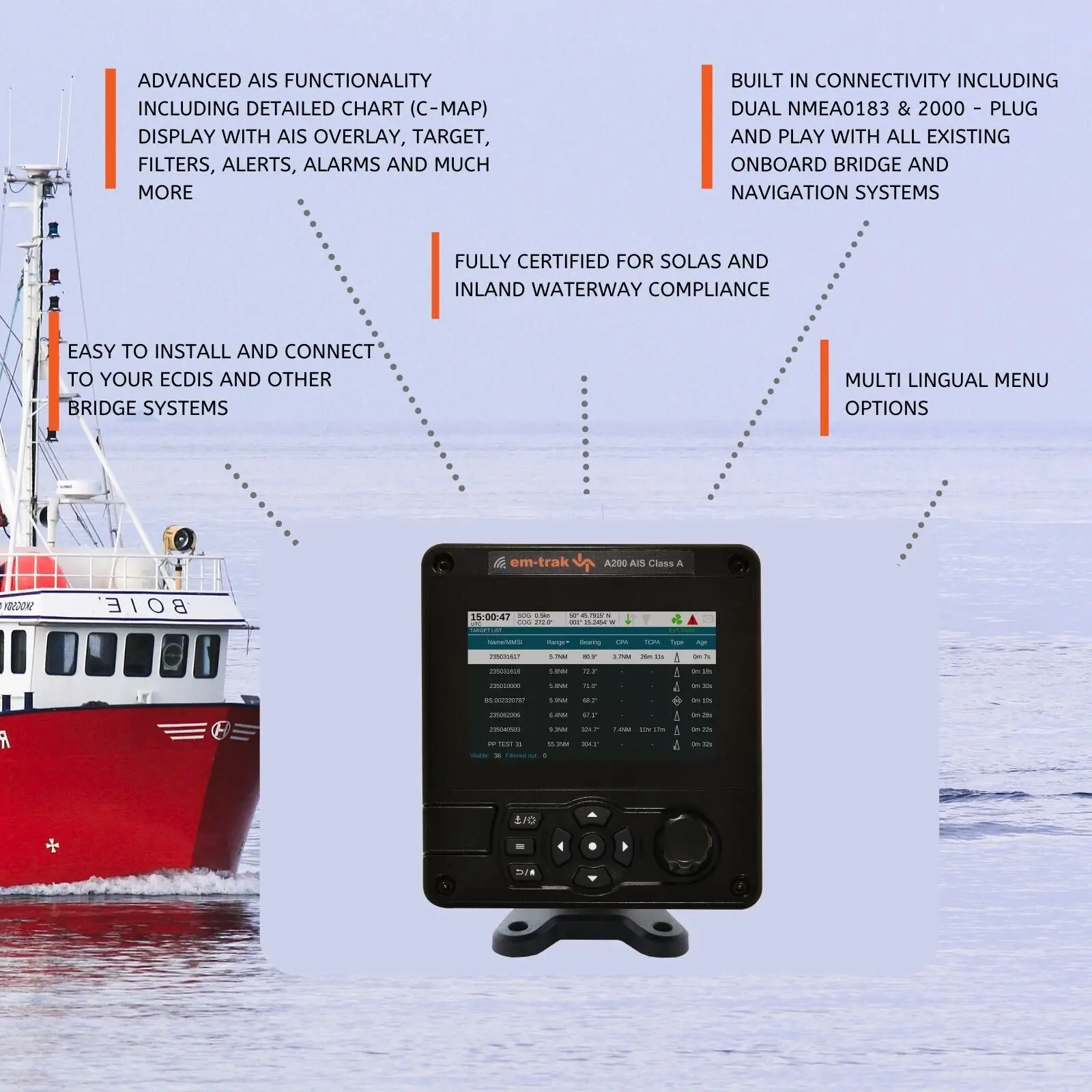
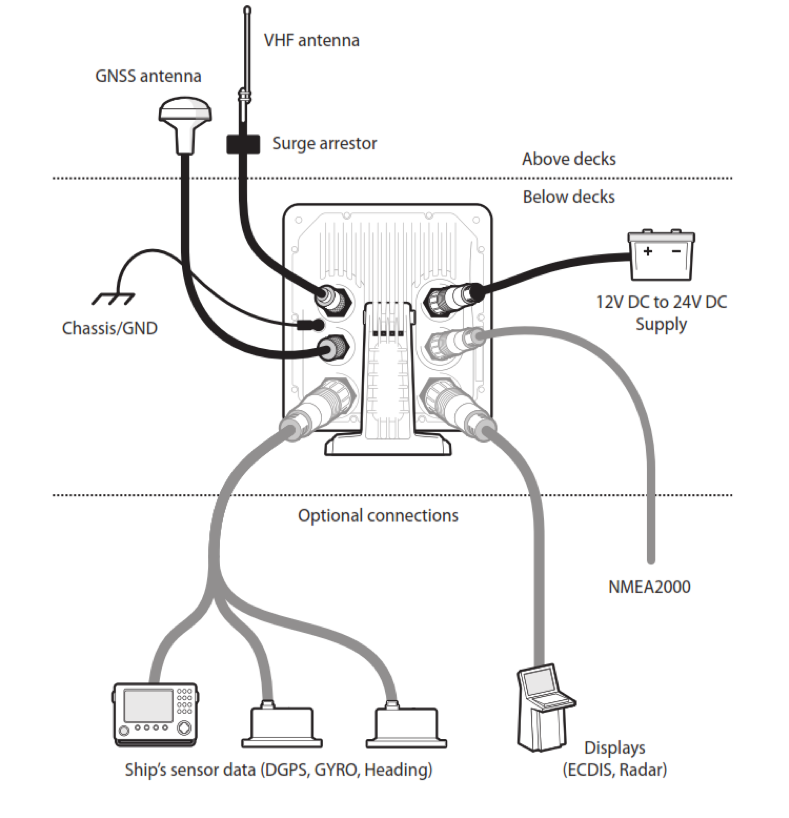
The A200 is built to serve a diverse fleet profile, reflecting its versatile engineering architecture. The system is applicable across multiple vessel categories, from commercial fishing operations to SOLAS-regulated commercial shipping and superyacht platforms. This broad vessel compatibility is achieved through configurable operational parameters and a standardized physical interface via the A200 Pilot Plug to 18-Way Data Cable Assembly, which provides a reliable connection between the AIS transponder and the vessel’s existing onboard electronics and navigation infrastructure.
The OEM product page provides downloadable technical documentation, including the English-language user manual and the A200 Pilot Plug to P12 Wiring diagram, enabling operators and marine technicians to access installation and configuration guidance directly from the manufacturer. These resources support accurate system integration and ongoing operational management.
Core Features & Operational Advantages
The Em-Track A200 Class A AIS delivers the following operational capabilities based on OEM product documentation:
Broad Vessel Type Compatibility
The A200 is engineered to support the following vessel categories, as specified by the OEM:
- Commercial Fishing Vessels (>15m): The A200 provides AIS transponder functionality suitable for fishing vessels exceeding 15 metres in length, supporting collision avoidance and vessel tracking in commercial fishing zones and open waters.
- Commercial Workboats: The system delivers reliable AIS performance for commercial workboat operations, enabling position reporting and vessel identification in busy commercial waterways, offshore support zones, and port approaches.
- Inland Waterway Vessels: The A200 supports inland waterway navigation, providing AIS-based vessel identification and tracking on rivers, canals, and inland shipping routes where AIS-enabled communication enhances safety and traffic management.
- SOLAS-Regulated Vessels: The A200 is applicable to vessels subject to SOLAS (Safety of Life at Sea) Chapter V regulations, which mandate the carriage of AIS on certain classes of commercial vessels for enhanced maritime safety and traffic monitoring.
- Superyachts: The system serves superyacht applications, providing Class A AIS functionality for large recreational vessels requiring advanced navigation, vessel tracking, and regulatory compliance capabilities.
- Physical Inspection: Regular visual inspection of the A200 unit, the A200 Pilot Plug to 18-Way Data Cable Assembly, and all physical connections to verify integrity and absence of corrosion, moisture ingress, or mechanical damage.
- Cable Assembly Verification: Periodic checks of the cable assembly connections and the Pilot Plug interface to ensure reliable data transmission between the AIS unit and the vessel’s onboard systems.
- Operational Testing: Routine functional testing of the AIS transponder to confirm proper transmission and reception of AIS messages, including position reports, vessel identification, and navigational status data.
- Documentation Reference: Operators and maintenance personnel should consult the OEM English user manual for detailed maintenance schedules, troubleshooting procedures, and configuration guidelines specific to the A200 unit.
Standardized Cable Assembly Integration
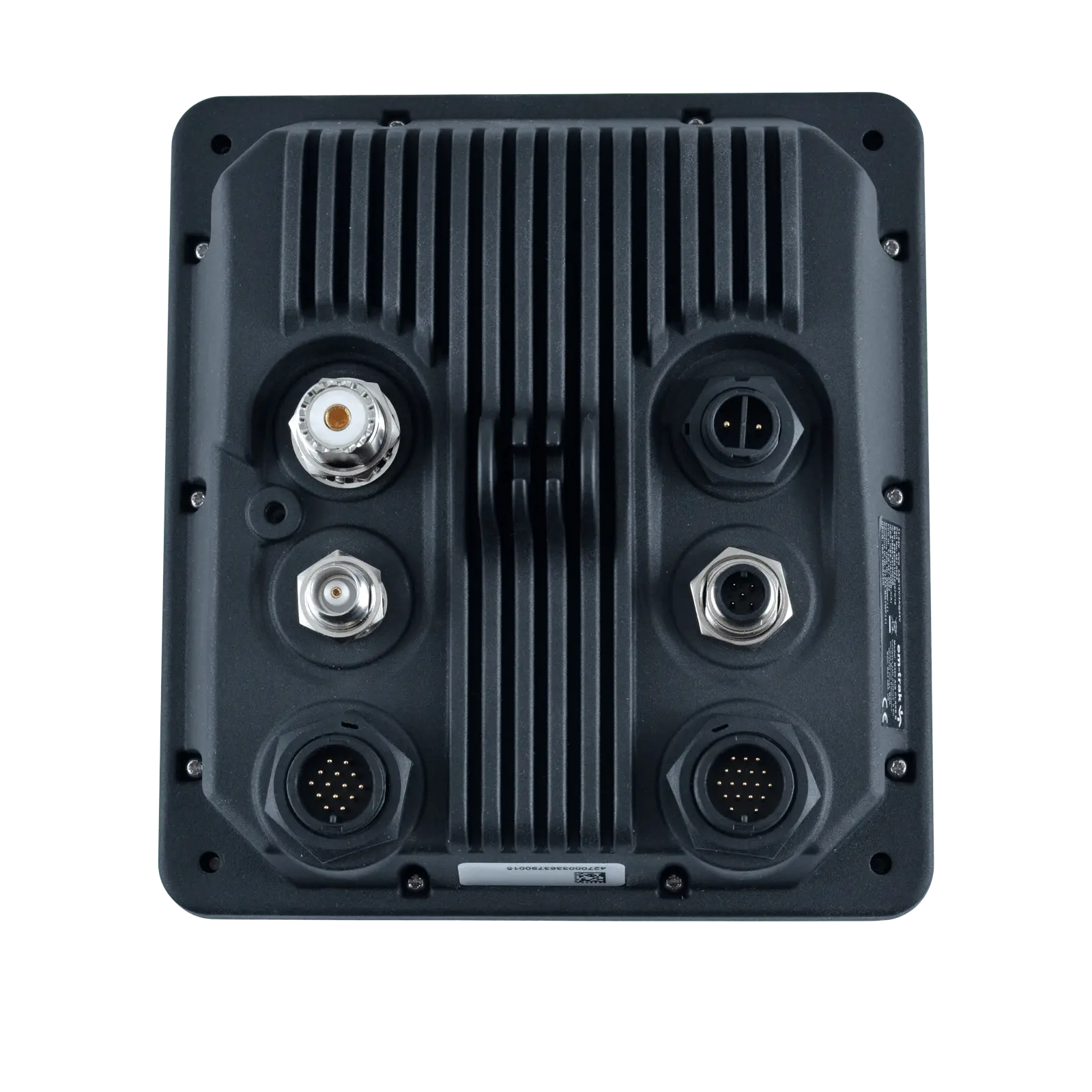
The A200 Pilot Plug to 18-Way Data Cable Assembly provides a dedicated physical interface for connecting the A200 AIS transponder to the vessel’s onboard data systems. This cable assembly simplifies installation by offering a pre-configured connection solution, reducing integration complexity during new-build or retrofit projects. The OEM also references an A200 Pilot Plug to P12 Wiring configuration, with the wiring diagram available for download as em-trak_A200_Pilot_Plug_to_PI2_Wiring_v4.pdf (472 KB), providing marine technicians with the necessary reference for correct electrical integration.
Comprehensive Operator Documentation
An English-language user manual is provided by the OEM for the A200 system, available as a downloadable PDF (201-0687_em-trak_A200_user_manual_EN_v9.pdf, 4422 KB). This manual covers system operation, configuration procedures, and operational guidance, serving as the primary reference for crew members and technical personnel responsible for the A200’s day-to-day use and management.
Component Breakdown & Technical Specifications
The Em-Track A200 Class A AIS system comprises the following key components and documentation as documented by the OEM:
| Component / Parameter | Description |
|---|---|
| Product Model | Em-Track A200 Class A AIS |
| AIS Class | Class A AIS Transponder |
| Supported Vessel Types | Commercial Fishing (>15m), Commercial Workboat, Inland Waterway, SOLAS-regulated Vessels, Superyacht |
| Cable Assembly | A200 Pilot Plug to 18-Way Data Cable Assembly |
| Wiring Reference | A200 Pilot Plug to P12 Wiring (diagram available for download) |
| User Manual Language | English (EN) |
| User Manual Reference | 201-0687_em-trak_A200_user_manual_EN_v9.pdf (4422 KB) |
| Wiring Diagram Reference | em-trak_A200_Pilot_Plug_to_PI2_Wiring_v4.pdf (472 KB) |
For the complete technical specifications, operational parameters, and installation requirements, refer to the OEM’s official product documentation and the downloadable resources linked above.
SOLAS, IMO, IEC & Classification Society Compliance
The Em-Track A200 Class A AIS is listed by the OEM as a supported system for SOLAS-regulated vessels. SOLAS Chapter V, Regulation 19, mandates the carriage of AIS on certain categories of commercial vessels, and the A200 is designed to serve vessels operating within these regulatory frameworks. The system’s Class A AIS functionality aligns with the IMO’s requirements for transponder-based vessel identification and position reporting on international voyages.
The OEM product data does not explicitly list additional IMO, IEC, or classification society approvals (such as DNV, ABS, or Lloyd’s Register) beyond the SOLAS vessel category designation. For specific compliance documentation, type approval certificates, or classification society verification relevant to your vessel’s flag state or operating region, please consult the OEM directly or contact Seanav Marine’s technical team for guidance.
Onboard Maintenance & Inspection Standards
The Em-Track A200 Class A AIS requires routine onboard maintenance in accordance with standard maritime electronic equipment practices and the OEM’s operational guidance. The English-language user manual provides operational and maintenance reference material for the A200 system. Key maintenance considerations include:
Seanav Marine provides professional Marine AIS Repair Service and can assist with A200 system diagnostics, maintenance scheduling, and spare parts supply across the UAE.
Technical Support & Port Delivery
Seanav Marine supplies the Em-Track A200 Class A AIS and provides technical support, system integration guidance, and port delivery services to marine operators across the UAE. Our service coverage includes key logistics ports such as Jebel Ali Port, Port Rashid, Khalifa Port, Port of Fujairah, and Khor Fakkan, ensuring timely access to the A200 system and associated components for vessels operating in regional and international waters.
For technical inquiries, spare parts availability, system compatibility assessment, or to request a quote for the Em-Track A200 Class A AIS, please contact the Seanav Marine technical team via Contact Seanav Technical Team. Our specialists can assist with product selection, installation planning, and post-sales support for your AIS requirements.
For additional reference, the OEM’s official product page is available at Official OEM Product Reference Page.
Seanav Marine also supplies a comprehensive range of GMDSS AIS systems, Class A GMDSS VHF radios, and magnetic compass calibration and repair services to support complete vessel navigation and communication infrastructure.
Frequently Asked Questions
Frequently Asked Questions
The A200 is designed to support Commercial Fishing vessels over 15 metres, Commercial Workboats, Inland Waterway vessels, SOLAS-regulated vessels, and Superyachts, as specified by the OEM.
The system includes the A200 Pilot Plug to 18-Way Data Cable Assembly, which provides a standardized physical connection interface between the AIS transponder and the vessel’s onboard electronics.
Yes. The OEM lists SOLAS as one of the supported vessel categories for the A200, indicating the system is applicable to vessels operating under SOLAS Chapter V regulatory frameworks that mandate AIS carriage.
The OEM provides an English-language user manual (201-0687_em-trak_A200_user_manual_EN_v9.pdf, 4422 KB) and an A200 Pilot Plug to P12 Wiring diagram (em-trak_A200_Pilot_Plug_to_PI2_Wiring_v4.pdf, 472 KB), both available for download from the OEM product page.
The A200 Pilot Plug to 18-Way Data Cable Assembly is the physical cable assembly provided with the system for connecting the AIS unit to the vessel’s onboard infrastructure. The P12 Wiring reference is a separate wiring configuration diagram available for download, providing guidance on the electrical connection layout for the pilot plug interface.
Based on the OEM product data, the A200 user manual is listed as available in English (EN). The OEM does not reference additional language versions in the available documentation.
Yes. Seanav Marine provides technical support and system integration guidance for the Em-Track A200 Class A AIS. Contact the Seanav Marine technical team via Contact Seanav Technical Team for installation planning and integration assistance.
The OEM product page data provided does not include detailed electrical specifications such as voltage, dimensions, or power consumption. For complete technical specifications, please refer to the OEM’s official product page or the downloadable user manual.