Key Features & Benefits of ECDIS
🗺️ Real-time position tracking
🧭 Route planning & monitoring
🚨 Automatic hazard alerts
📡 Integrated with GPS, AIS, radar
🖥️ Simplifies bridge operations
📉 Reduces navigational errors
🛠️ Complies with IMO & SOLAS
📚 Digital chart updates
🔗 Interoperability with ship systems
💡 Enhanced situational awareness
ECDIS Installation & Support
ECDIS Installation
Certified installation service ensuring full compliance and optimal performance on board.
Training & Support
User training, certification assistance, and support to maximize ECDIS utility and safety.
Chart Updates & Maintenance
Regular chart updates, software checks, and system maintenance to ensure accuracy.
System Integration
🔗 Works with radar, GPS, AIS, gyro
📶 NMEA0183 / NMEA2000 protocols
💾 S-57/S-63 ENC compatibility
📋 SOLAS regulation compliance
🖥️ Multi-display configuration support
Bridge Integration
🛳️ Part of Integrated Bridge Systems (IBS)
🔍 Overlay with radar & AIS targets
🛠️ Compatible with conning displays
🔔 Alarm & alert system integration
📡 Real-time dynamic updates
Frequently Asked Questions (FAQs)
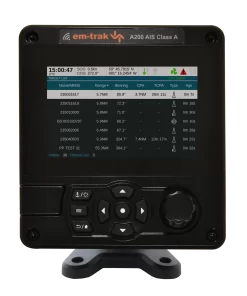
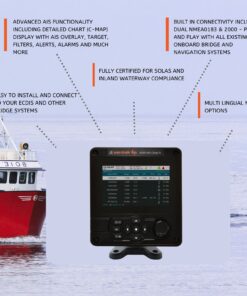
ECDIS stands for Electronic Chart Display and Information System. It’s a digital navigation system used on ships to display electronic charts and integrate other navigation data like GPS, radar, and AIS.
ECDIS enhances safety and efficiency in navigation by providing real-time data, route planning, and hazard warnings while replacing traditional paper charts.
Yes. Under SOLAS regulations, ECDIS is mandatory for certain types of commercial vessels such as tankers, passenger ships, and cargo vessels over specific tonnage.
Absolutely. ECDIS allows detailed route creation, adjustment, and optimization, ensuring compliance with navigation rules and safety margins.
ECDIS integrates data from GPS, AIS, radar, depth sounders, and gyrocompasses to deliver accurate and real-time positioning and situational awareness.
Yes. For compliant ships, ECDIS becomes the primary means of navigation, making paper charts optional unless redundancy is required by flag state.
Yes. Officers must undergo ECDIS training approved by the IMO and receive certification to operate the system onboard legally and safely.
Yes. ECDIS provides visual and audible alarms for issues like shallow waters, route deviations, and potential collisions based on set parameters.
Yes. Regular updates of ENC charts ensure compliance and safe navigation. Updates are often delivered through USB or direct download via chart services.
Yes. SEANAV Marine provides installation, maintenance, training, chart updates, and system integration for major ECDIS brands in UAE and India.